Rooppur Nuclear Power Plant
Management of hazardous spent fuel still uncertain
- Nine years after agreement to return spent fuel to Russia, final deal remains unsigned
- Prolonged delay narrowing Bangladesh’s room for negotiation

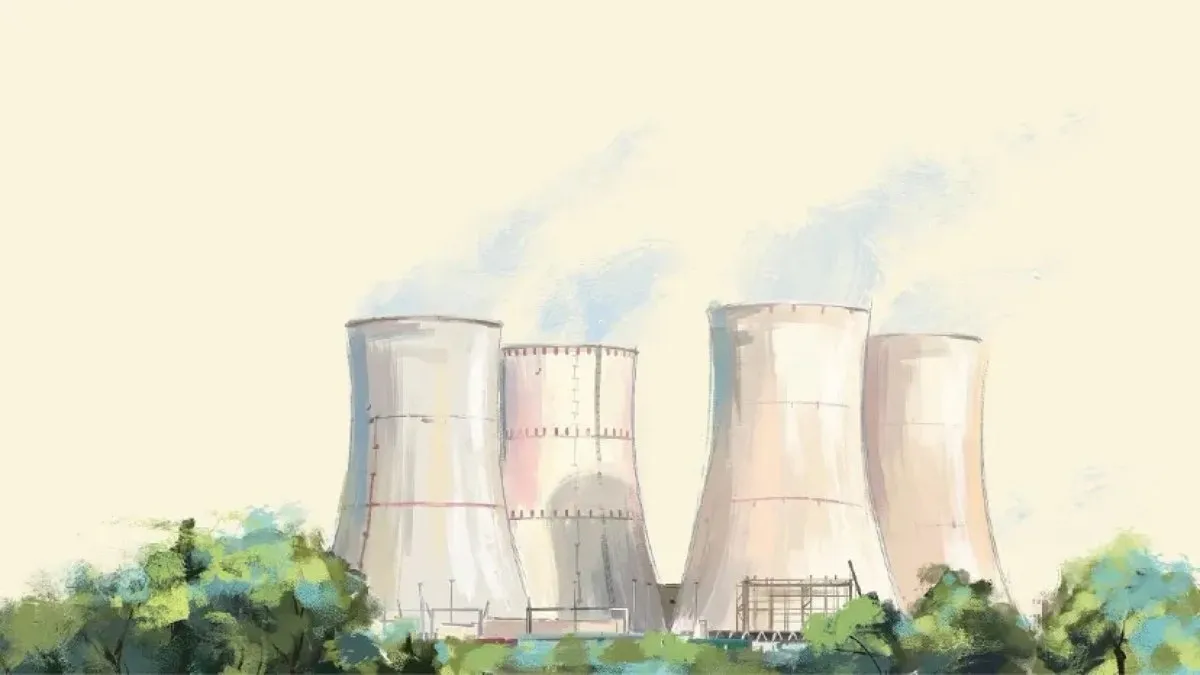
Graphics: Agamir Somoy
Electricity generated by the Rooppur Nuclear Power Plant in Ishwardi, Pabna, has been temporarily connected to the national grid on a trial basis. However, the fate of the spent fuel, or hazardous used nuclear fuel, generated during electricity production remains uncertain.
Since the beginning of the construction work, there has been an understanding that Russia would take back the nuclear waste. However, the commercial and implementation arrangements for when, how and at what cost the waste will be removed from Bangladesh have yet to be finalized. As a result, although the country’s first nuclear power plant has begun generating electricity, uncertainty remains over a crucial aspect of managing its most sensitive waste.
Due to intense heat and radioactivity, spent fuel poses serious risks to human health and the environment. Therefore, it must be stored under special arrangements. As Bangladesh lacks the capacity to manage it independently, Russia was expected to take the spent fuel back.
The two countries reached an agreement on August 30, 2017. However, even after nine years, the final or legally binding agreement on the matter has not been signed.
This prolonged delay, along with global geopolitical and technical realities, is narrowing Bangladesh’s scope for negotiations with Russia. At the same time, it is raising complex questions about future costs, safety and storage responsibilities. The unresolved issue has also created uncertainty over the actual cost of nuclear-generated electricity, as these expenses must be considered alongside other costs when determining electricity tariffs.
Once nuclear fuel is loaded into the Rooppur plant, the reactor will initially operate continuously for one and a half years. It will subsequently operate for up to two years. After that, one-third of the fuel will be replaced with new fuel during each refueling cycle.
Uranium-235 is used as fuel in nuclear power plants. However, this fuel is not entirely consumed inside a nuclear reactor. The remaining material is known as spent fuel or radioactive nuclear waste.
Used fuel is initially kept in deep pools of water inside the reactor building for several years to cool down. The water absorbs heat and blocks radioactive radiation. Once the temperature decreases to a certain level, the fuel is placed in specially designed thick steel and concrete containers known as dry casks. These are then stored within the power plant premises or at separate storage facilities under special arrangements.
According to project officials, the storage facility at Rooppur has the capacity to store spent fuel for up to 10 years. During this period, it will be sent back to Russia under special arrangements.
Project Director Dr. Kabir Hossain said, “At this moment, we are not thinking about this at all. This is because Bangladesh has the capacity to store spent fuel for 10 years. Where will technology stand by then? Whether it will actually be necessary to send it to Russia or not can be considered at that time. Besides, there are financial and other issues involved in sending it back to Russia. First, let us generate electricity and earn revenue. We can look into the matter afterward.”
However, the cost of sending the spent fuel back must also be considered when determining electricity prices. Asked about this issue, the project director said the government would make the decision.
Experts, however, disagreed with the project director’s position. They believe that due to various limitations, Bangladesh is unlikely to develop the capacity to manage spent fuel within the next 10 years or even afterward. Many developed countries around the world have also failed to acquire this capacity.
Globally, two main methods are followed for the final management of used nuclear fuel.
The first is reprocessing, through which materials such as uranium and plutonium are separated from used fuel and reused to produce new fuel. The remaining highly radioactive waste is stored and ultimately disposed of under special arrangements.
The second method involves storing used fuel for an extended period without reprocessing. It is then placed in specially designed canisters inside underground repositories.
Russia follows the reprocessing method and buries the remaining highly radioactive waste in uninhabited areas at a depth of approximately 400 meters underground.
On the other hand, several countries, including the United States and Finland, are constructing permanent deep geological repositories. Such facilities are generally built several hundred meters below the Earth’s surface. However, they are extremely expensive and require long-term geological research, safety assessments and advanced technological capabilities.
Nuclear experts say Bangladesh is committed to the peaceful use of nuclear energy. Among the technologies currently available worldwide, spent fuel management is one of the most sensitive and complex.
In this regard, technology, costs, specialized manpower, safety, prevention of misuse and compliance with the safeguards of the International Atomic Energy Agency (IAEA) are crucial. Various other factors are also involved, including geopolitical issues.
Building a permanent deep geological repository is also a major challenge for a densely populated country with limited land resources like Bangladesh. The necessary technology, skilled manpower and infrastructure have yet to be developed. There is little prospect of achieving such capabilities in the foreseeable future.
For this reason, the IAEA recommends that countries that have built new nuclear power plants with assistance from other countries, or operate only a limited number of such facilities, should return used nuclear fuel to the country from which they imported it for long-term management.
In addition, Bangladesh’s 2019 national policy established a framework for managing radioactive waste and used nuclear fuel.
Considering these realities, nuclear experts believe returning the used fuel to Russia, the supplier country, is the only viable option for Bangladesh.
According to them, Russia has agreed to take back the used fuel from the Rooppur Nuclear Power Plant, and an intergovernmental agreement has also been signed between the two countries. In this case, Bangladesh will bear the costs of transportation, storage and other related expenses.
Experts and industry insiders say that although an intergovernmental agreement provides the framework, detailed issues must be clearly defined through an effective commercial and legal agreement. These include the costs of returning the fuel, transportation, storage, reprocessing and responsibility for the resulting waste.
They believe that it will take another one to two years to properly understand all the issues and finalize such an agreement.
According to them, delays in finalizing the agreement could weaken Bangladesh’s negotiating position over future costs and conditions. Geopolitical issues must also be taken into consideration.
In the past, sanctions-related complications created problems with the supply of equipment for the Rooppur project and payment arrangements. Most recently, a shipment of nuclear fuel was held up due to objections from Pakistan. However, Russia later brought the fuel to Bangladesh using Pakistani airspace.
Therefore, alongside finalizing the agreement quickly while protecting Bangladesh’s interests, it is essential to develop advance plans to address potential geopolitical risks and strengthen effective nuclear diplomacy without delay.
Nuclear expert Professor Dr. Shafiqul Islam told Agamir Somoy that spent fuel is extremely dangerous and expensive to store over the long term. He said the process through which the fuel would be sent to Russia and the associated costs needed to be clarified.
“At the same time, another matter of concern is the large quantities of different types of nuclear waste that will be generated at the facility apart from spent fuel. Proper management of this waste, the development of long-term capacity and the establishment of a waste management company are necessary. It is very important to complete these crucial tasks before commercial production begins without any further delay,” he added.
At one time, used nuclear fuel from Finland’s Loviisa plant and several other countries in Eastern Europe was sent to Russia. Later, Finland decided to manage the final disposal of its used fuel independently. Ukraine has also developed its own storage system.
Meanwhile, arrangements are in place to return used fuel from Iran’s Bushehr and Turkey’s Akkuyu nuclear power projects.
Although Russia supplies nuclear fuel to India’s Kudankulam project, the used fuel is being stored in India.
Used fuel from Pakistan’s nuclear power plants is also primarily stored under the country’s domestic management system.