
Tk 87,000 crore in garment export earnings trapped in foreign hands
- Repeated appeals to finance ministry and central bank
- More than 100 lawsuits and counterclaims stall recovery process

Collected Photo
Bangladeshi garment manufacturers have yet to receive $7 billion in export proceeds from garments shipped to various countries around the world. At an exchange rate of Tk 125 per dollar, the amount stands at Tk 875 billion, or Tk 87,500 crore. The trend began in 1990 and has continued for the past 36 years. This means an average of Tk 2,400 crore has gone missing every year.
The Bangladesh Garment Manufacturers and Exporters Association (BGMEA) has not published a specific consolidated figure or a single dollar amount covering total export earnings over the past 36 years in its general information. However, a review of BGMEA and Export Promotion Bureau data indicates that goods worth $600 billion were exported during this period.
Repeated appeals to government ministers, the governor of Bangladesh Bank, the chairman of the National Board of Revenue and other senior officials at various levels have failed to resolve the problem. The amount of export proceeds that have not returned to the country is equivalent to nearly one fifth of Bangladesh’s current foreign exchange reserves.
It is astonishing that this trap has persisted in international trade for so many years. After goods are loaded into containers at Chattogram Port and shipped to various destinations in Europe and the United States, foreign buyers can easily take delivery of them. However, the payment does not reach Bangladesh after the goods are received.
The first reason is that the domestic seller’s bank is not named in the export documents. Acting in good faith and at the request of foreign buyers, exporters sometimes prepare export documents in the name of the buyer’s company or its representative. As a result, the payment does not return through the exporter’s bank.
The second reason is that some buyers commit fraud after taking delivery of goods while others go bankrupt. This creates a crisis in bringing substantial amounts of foreign currency back into the country.
In this complex situation, domestic sellers, foreign buyers, shipping agents and freight forwarders all bear some responsibility. Ultimately, however, garment industry owners are the ones suffering the losses.
Some business owners have become mentally distressed after failing to receive payments, with one later dying of a heart attack. Some factories have shut down permanently, while others have gone bankrupt.
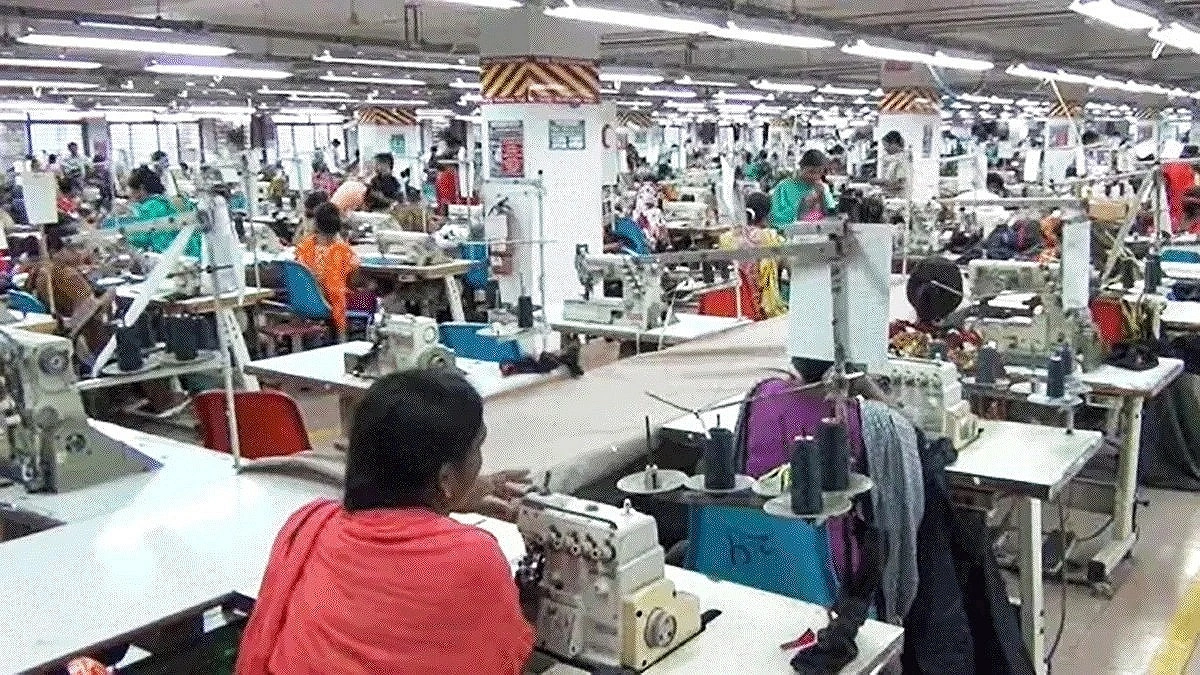
The garment industry is one of Bangladesh’s leading export earning sectors. The number of factories, once around 6,000, has fallen by 3,400 to just 2,600. Business associations are once again negotiating with the authorities to find ways to manage the fragile situation and recover payments from foreign buyers.
On September 12, Selim Rahman, first vice president of the Bangladesh Garment Manufacturers and Exporters Association (BGMEA), wrote to Finance and Planning Minister Amir Khosru Mahmud Chowdhury. The letter requested measures to protect the repatriation of foreign currency earned by the country’s export sector.
Similarly, A M Mahbub Chowdhury, vice president of the Chattogram Metropolitan Chamber of Commerce and Industry, sent a letter on September 14 to Harun Or Rashid, executive director of Bangladesh Bank’s Foreign Exchange Policy Department. The letter stated that export proceeds worth $7 billion had failed to return to the country because goods were delivered without preparing the required BL (bill of lading) documentation, according to Bangladesh Bank guidelines. It called for initiatives to resolve the problem.
Confirming that he had sent the letter, Selim Rahman, managing director of leading exporter KDS Group, said, “Shipping agents and freight forwarders delivered the goods abroad. As a result, an estimated $7 billion has not been received. Although the amount will be more than $10 billion. This is also one of the major reasons behind the closure of so many garment factories in the country.”
Arafat Fashion Garments Limited in Chattogram exported goods worth $400,000, equivalent to Tk 5 crore, but has not received the payment in 25 years. Filing a court case has also failed to resolve the matter. The factory was shut down in 2002 because the payment never arrived.
A M Mahbub Chowdhury, owner of the affected company, expressed his frustration, saying, “I have sought a remedy from the governor of Bangladesh Bank whenever he has visited Chattogram. I have also met with the finance minister.”
Garment factory owners have filed nearly 100 lawsuits in the hope of recovering their money. However, writ petitions filed by shipping agents in the High Court in response to these cases have brought the entire process to a standstill.
Alongside renewed efforts through government channels, garment businesses have also begun fresh legal initiatives to recover their money through the courts.
Barrister Mohammad Nuruzzaman, legal adviser to BGMEA, told Agamir Somoy, “A case concerning export proceeds that have not been received from abroad is being prepared for a hearing before a five-member bench of the Supreme Court’s Appellate Division led by the chief justice.”
It is believed that if the ruling favors garment factory owners, it could serve as a precedent and make it easier to resolve the remaining cases.
Saif Ullah Mansur, another BGMEA director and managing director of Mellow Fashion Limited, said, “In 2024, I sent five containers of boys’ cargo shorts worth $400,000 to the United States through One Line Shipping. The goods were delivered without bank documents, and I have still been unable to bring the payment back into the country. I filed a lawsuit. However, as in other cases, One Line obtained a stay order from the High Court in my case. Instead, they filed a fraud case against me to harass me. Although a Criminal Investigation Department (CID) investigation found no evidence of fraud.”
The story does not end there. Tradecom Garments Limited exported goods worth $498,000, equivalent to Tk 6.25 crore. After failing to receive payment, it immediately shut down four factories in 2002. The factory owner later became mentally distressed and eventually died of a heart attack.
In response to similar circumstances, Ershad Ullah, then a BGMEA vice president and now a Bangladesh Nationalist Party (BNP) lawmaker, wrote to then Commerce Minister Amir Khosru Mahmud Chowdhury in 2003 seeking a remedy.
The minister immediately formed a national committee headed by the commerce secretary. However, the affected business owners have received no remedy in the 23 years since then. The BNP remained out of power from 2007 until February 2026.
Why has this crisis in garment exports continued for so many years, and why has there been no solution? What is really happening?
To understand the situation, contact was made with Ahsan Iqbal Chowdhury Abir, managing director of Continental Group, one of the country’s leading shipping businesses.
He said, “There is no doubt that garment businesses in the country have suffered substantial financial losses in this sector. The crisis arose because of direct communication and relationships with foreign buyers, as well as intense competition among domestic businesses to secure orders.”
Giving an example, he explained that shipping agents have no control over the delivery of goods abroad. Containers filled with goods are handed over to representatives of foreign importers according to the documents provided by exporters.
Because the names of companies or individuals appear in these important documents instead of the names of banks, there is no legal obligation to ensure that payments are made. The entire process depends on the terms and conditions agreed upon by importers and exporters.
Garment businesses in Bangladesh insist that foreign buyers should not be allowed to take goods without making payment. They question why shipping agents and freight forwarders deliver goods without verifying whether the export proceeds have returned to the country.
Freight forwarders handle 90 percent of all formalities for garment products exported through Chattogram Port.
Bangladesh’s market for readymade garment exports gradually expanded after 1980. Despite numerous challenges, the sector now employs approximately 4 million workers.
The country exports goods worth around $40 billion annually from this sector, equivalent to Tk 5 lakh crore. This is more than half of the country’s announced national budget of Tk 9.38 lakh crore.
