An Ancient Form of Teaching
A traditional school where children learn their first letters using palm leaves, ink

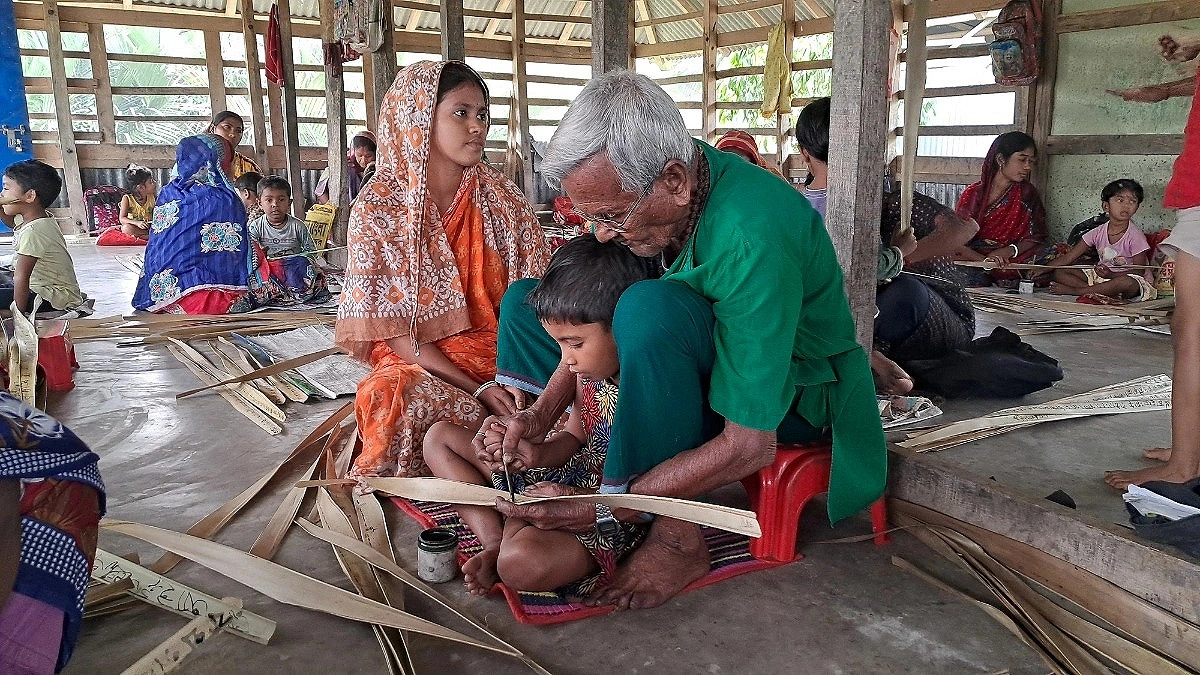
Photo: Agamir Somoy
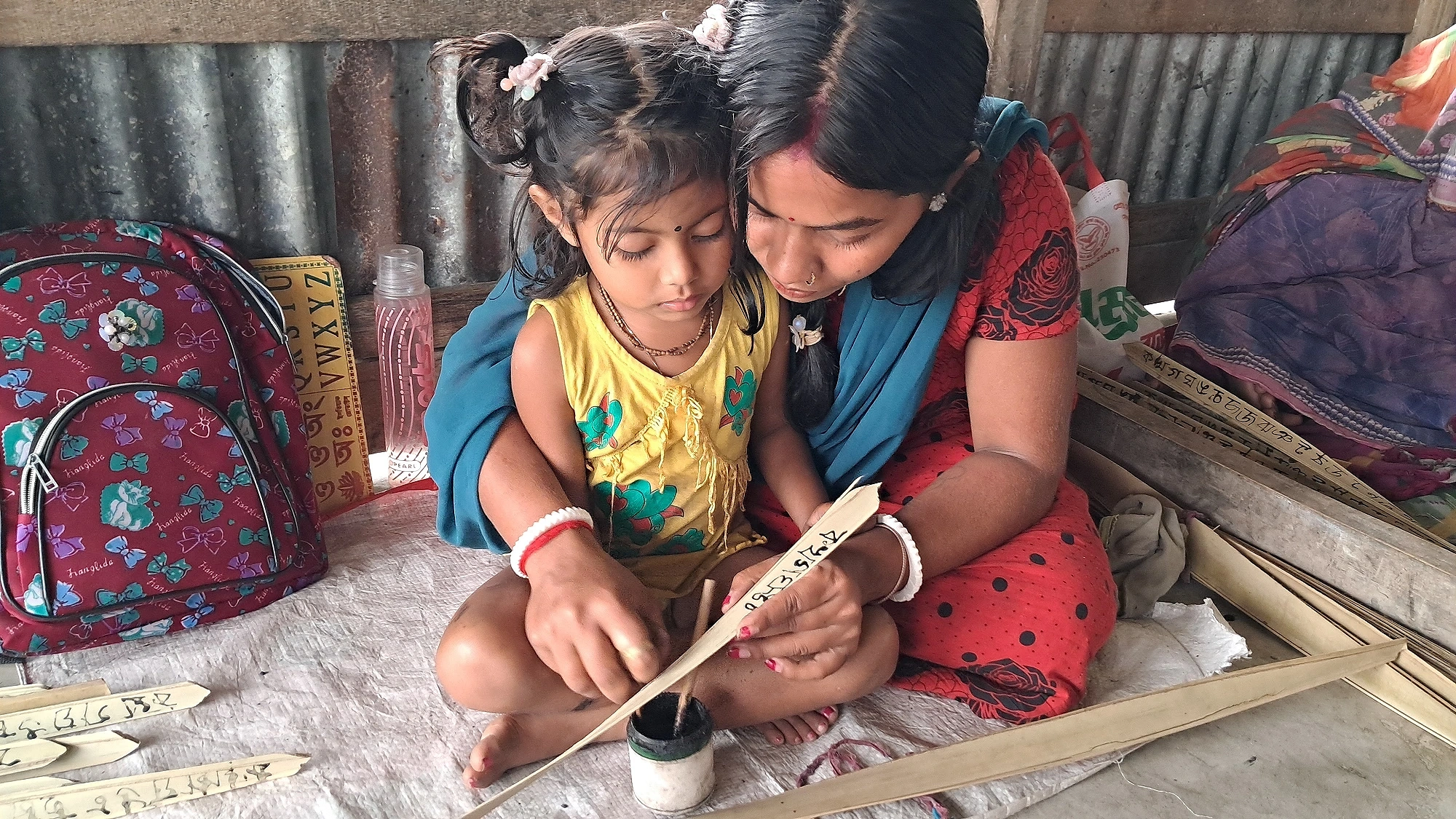
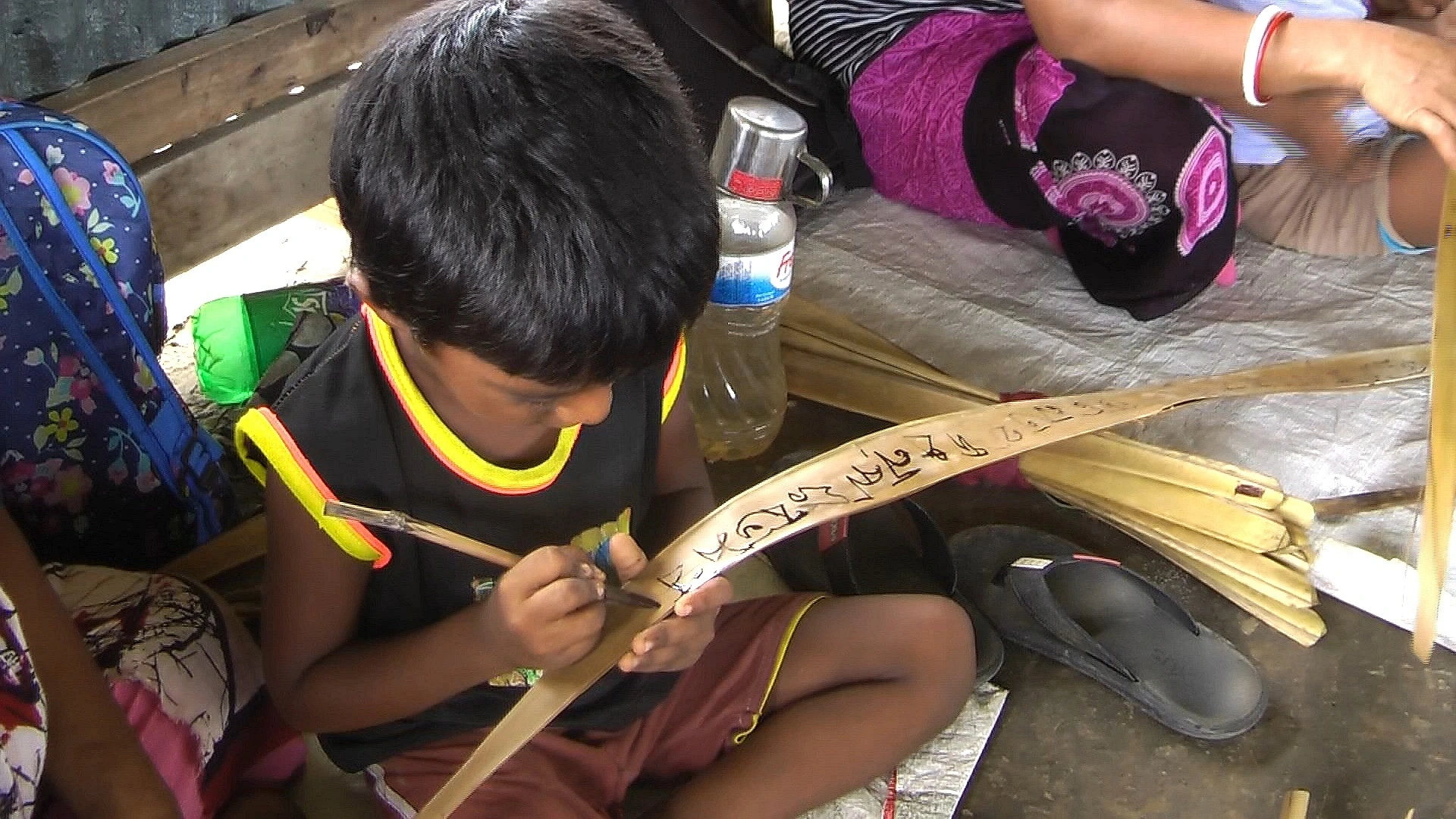
Palm leaves are scattered across the floor. The room is filled with the chirping of children. In one hand, a bamboo pen; in the other, a palm leaf. They are learning to write the alphabet by dipping the pen into ink made from lampblack.
This scene is not from a thousand years ago—it is from the present day. In an era when slate-chalk and blackboards have been replaced by various digital devices for learning the alphabet, such a palm-leaf school still operates in Bagerhat.
To revive this tradition, "Shishu Shiksha Niketan" was established in 2005 in South Dumuria village under Chitalmari Upazila. For 22 years, children of the area have been learning the alphabet on palm leaves here. The teacher is 80-year-old scholar Kalipad Biswas.
Why palm leaves in the age of digital devices? The answer can be found in the words of the students and parents here.
Little student Lakkhi Majumdar said, "If you make a mistake while writing on a palm leaf, it cannot be erased easily. So you have to write with concentration. This also improves writing habits."
According to parent Shyamoli Rani, children nowadays quickly lose focus in their studies because of mobile phones and television. In this traditional school, writing is taught within a set of rules. Writing on palm leaves requires great concentration. This helps increase focus.
Sagar Biswas started his educational journey from this school. He now studies at PC College in Bagerhat town. He said, "The habit of writing on palm leaves has made my handwriting beautiful. Besides, the discipline and moral education I received here have been very beneficial for me."
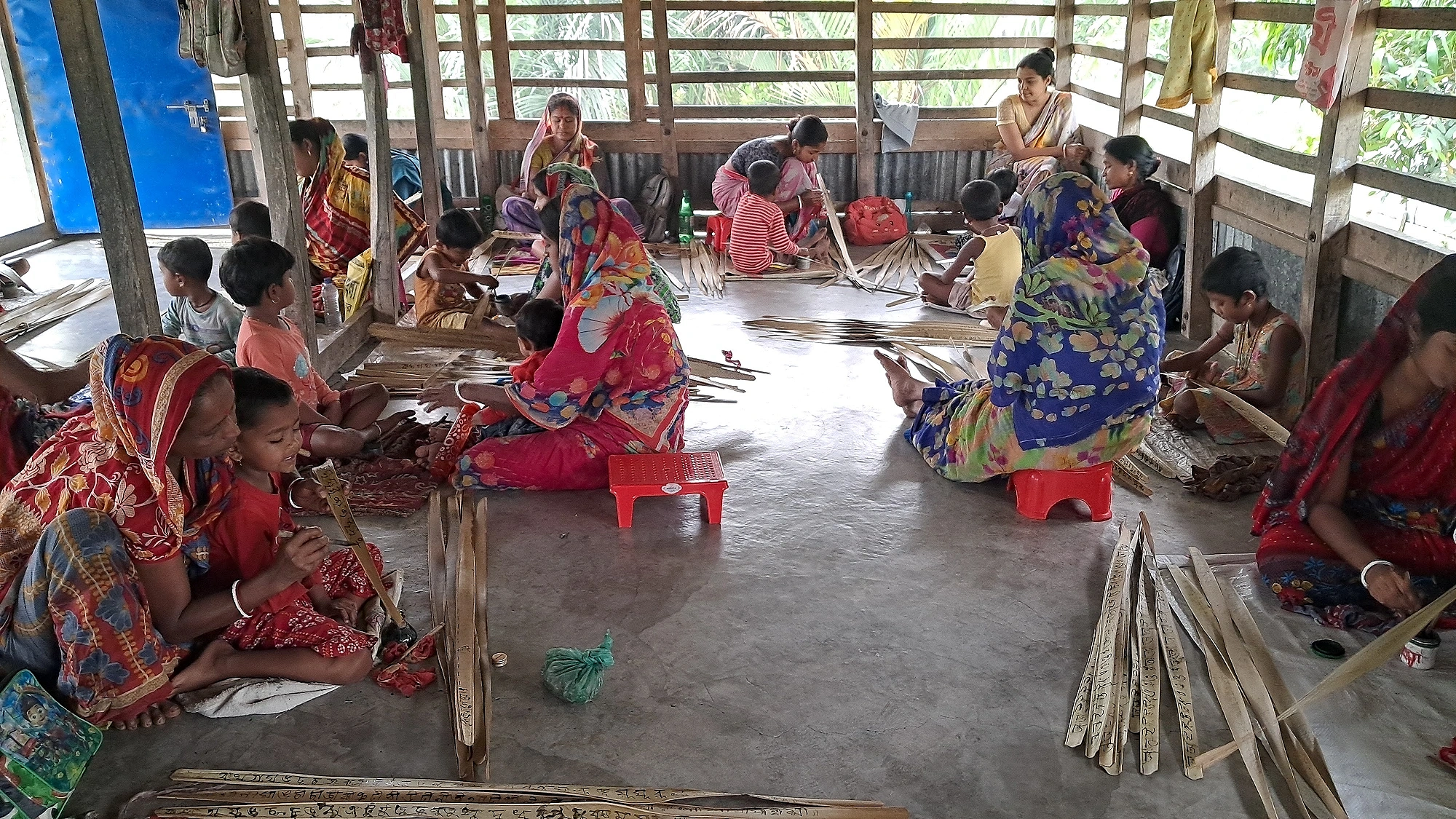
Scholar Kalipad started the traditional school with three children in his own home. As the number of students grew, a villager gave him a piece of land to build a schoolhouse. There, in a small one-room school, there are now 50 students. They are regularly taught vowels, consonants, spelling, and arithmetic (percentages).
Tiny hands reach for the bamboo pen, inkpot, and palm leaf. The scholar sits beside them, guiding their hands to teach writing. Mothers come to the school daily with their children. Some sit to dry palm leaves in the sun, while others are busy cutting bamboo twigs to make pens.
"Writing on palm leaves improves children's handwriting, and they remain engaged in regular practice," said scholar Kalipad.
He informed that Tk 150 is charged per month for teaching vowels and consonants. For spelling and arithmetic (percentages), Tk 200 each is charged. This income covers the necessary expenses of the traditional school.
Local social worker Gouranga Mandal believes this school is not just an educational institution but also part of the area's heritage. "Kalipad sir teaches the children with great sincerity. He holds each child's hand and teaches them to write. That is why we feel comfortable sending our children here," he said.
"Shishu Shiksha Niketan" also has various limitations. "During summer, the children suffer due to lack of electricity. Again, during the rainy season and high tide, they have to wade through knee-deep mud and water to return home," said parent Ankita Rani. Other parents echoed her, mentioning infrastructural problems.
Nevertheless, the local residents remain united in preserving this traditional education system. Their expectation for solving the crises is administrative attention and government patronage.
"This school in South Dumuria is a unique testament to our traditional education and culture. Necessary initiatives will be taken by the district administration for its development and preservation," assured Golam Md. Baten, the Deputy Commissioner of Bagerhat.