
New education curriculum to be introduced from 2028: Education Minister

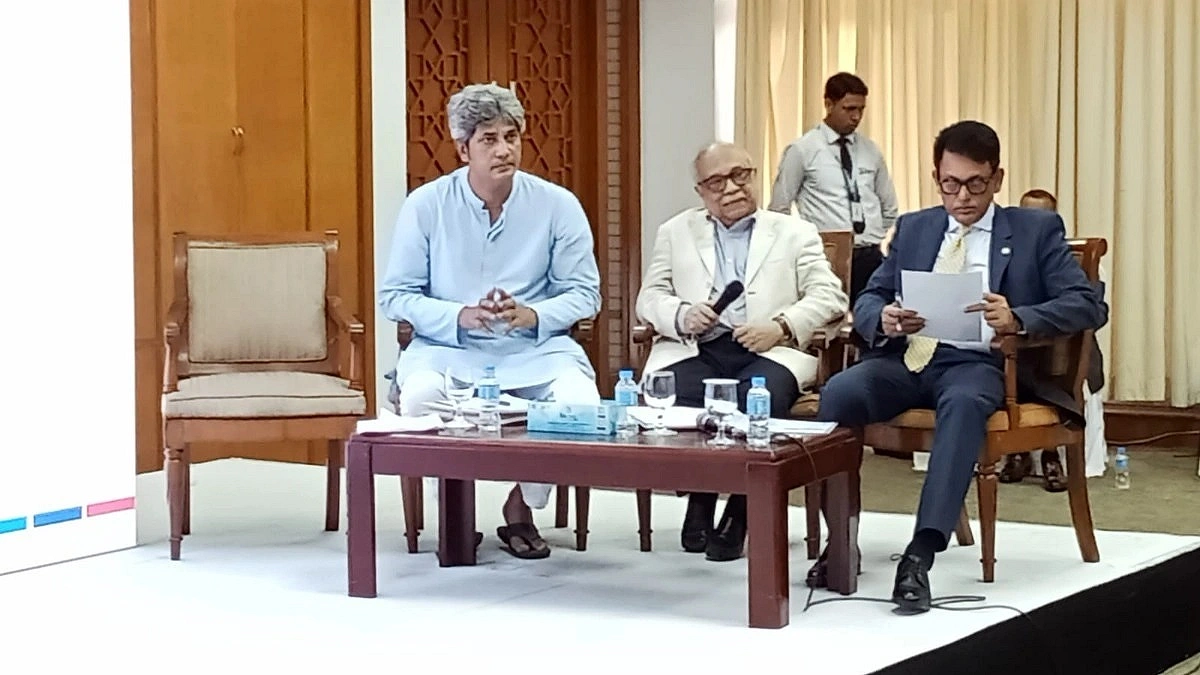
Photo: Agamir Somoy
“There is no education system like ours anywhere in the world. This situation needs to change. So far, only four new books have been provided. A new education curriculum will be introduced by 2028. Preparations are being made from now,” Education Minister A N M Ehsanul Haque Milon said.
He made the remarks while speaking at a session of the National SDG Conference on Tuesday. The session, titled “Reconstructing Fragile Economy and Achieving SDGs,” was held on the second day of the three day event at the Bangladesh China Friendship Conference Center in Sher e Bangla Nagar, Dhaka.
“There is system loss in education. Students are dropping out at every stage. The situation is terrible. System loss in electricity can be recovered. But system loss in education is causing irreparable damage to the nation. Work is underway to get out of this situation,” he said.
According to him, there is no alternative to quality education for achieving the SDGs. For this reason, allocations for education are being increased. On August 15, pension benefits will be provided to 75,000 teachers. Prime Minister Tarique Rahman will inaugurate the program.
Expressing some disappointment, he said, “I thought that after the July Revolution, everyone would work together to build the country. But that is not happening. There are protests and more protests. There are protests whether exams are held or not. There are protests whether students pass or fail. Protests are preventing us from working. This was not expected. We need to be a little patient. We need to see what we are doing. Let the critics criticize, but it must be constructive.”
At the event, Planning State Minister Zonayed Abdur Rahim Saki said, “Work is underway to build an investment driven, employment oriented economy. But the major challenge is the energy crisis. This crisis cannot be solved by simply flipping a switch. Alongside extracting gas from the country, efforts are being made to import LNG from various countries. But there are problems with those imports as well.”
Former Asian Development Bank Director General Dr. Sultan Hafiz Rahman chaired the event. The panelists included Rasheda K Chowdhury, executive director of Campaign for Popular Education; Syed Sultan Uddin Ahmed, executive director of the Bangladesh Institute of Labour Studies; Dr. Shahedul Islam, secretary general of the Bangladesh Garment Manufacturers and Exporters Association; and Fazlul Kader, managing director of the Palli Karma Sahayak Foundation. Six papers on various SDG goals were presented at the event.
The speakers said there is no alternative to quality education for achieving the Sustainable Development Goals. A skilled workforce must be developed to take advantage of the demographic dividend. The risk of poverty in the country must be reduced. They also said that creating decent work requires improving the business environment and removing barriers to trade. Good governance must be ensured. They also said income inequality cannot be eliminated by paying low wages to workers who contribute to income generation.
In particular, Dr. Manzur Hossain, member secretary of the General Economics Division, complained that the country does not have updated data on the poverty rate. However, research by various private organizations has reported that inflation has increased due to the COVID 19 pandemic, wars and various other factors. This has had a negative impact on poor people. The poverty rate has increased. At the same time, income inequality has also increased. These are among the major obstacles to sustainable development.
