UNESCO GEM Report
Bangladesh ahead in primary, behind in higher secondary
- Pass rate is 74% at the lower secondary level and 38% at the higher secondary
- Girls are showing better progress compared to boys
- Students dropping out has also decreased significantly

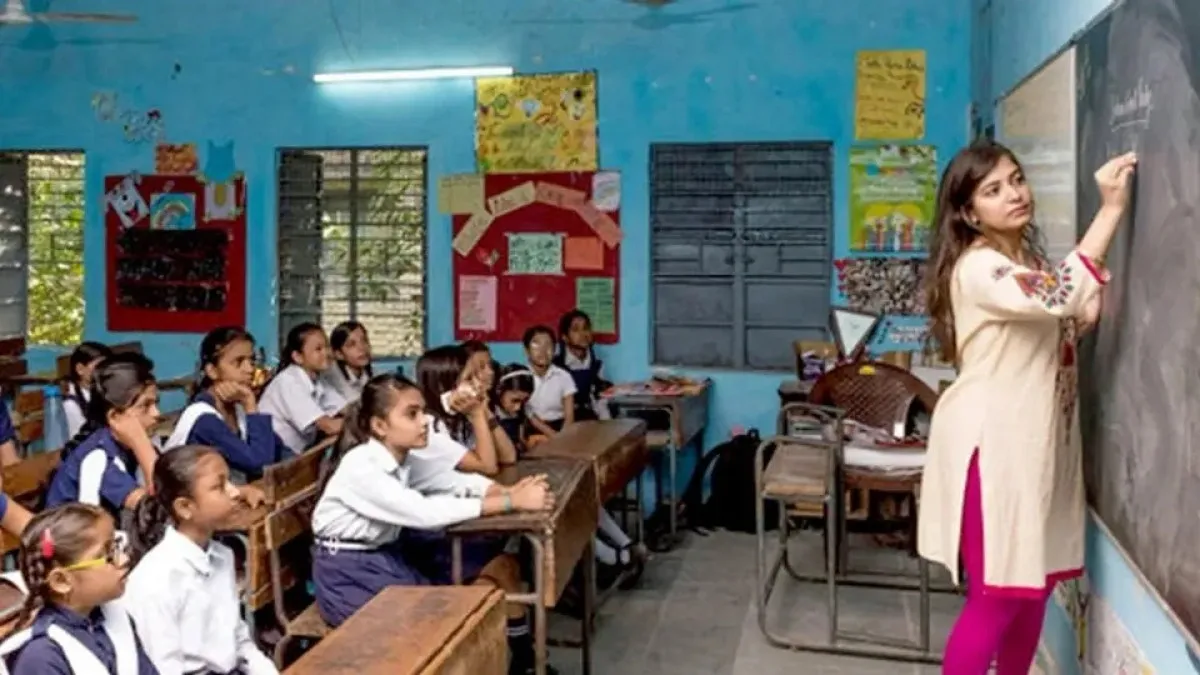
Representational image. Collected.
From less than 20 percent immediate after Bangladesh's liberation in 1971, the literacy rate has gone up significantly thanks to various government and non-government programs.
Students are now completing primary, lower secondary and higher secondary levels at much higher rates than before. But the higher they go, the lower the completion rate becomes. Girls have played a special role in this progress. The upward trend has continued for three decades. This picture emerged in a report by the United Nations Educational, Scientific and Cultural Organization (UNESCO).
The organization highlighted this picture of Bangladesh's education sector in the "Global Education Monitoring (GEM) Report 2026." The report, titled "Access and Equity: Countdown to 2030," recently published officially at UNESCO headquarters in Paris, said that although ensuring education for all by 2030 under Sustainable Development Goal 4 (SDG-4) may not be possible worldwide, Bangladesh has shown major success in expanding primary and secondary education.
UNESCO says Bangladesh has made massive progress in education over more than three decades. In this regard, girls' progress has been greater than boys'. The primary education completion rate rose from 34 percent in 1990 to 90 percent in 2024. At the lower secondary level, this rate rose to 74 percent. However, at the higher secondary level, it is 38 percent. Behind this long-term progress, along with the expansion of education, socioeconomic changes such as a decline in child marriage, a drop in the birth rate and increased participation of women in the labor market have played a major role.
In the 1990s, the primary education completion rate grew by 2.2 percentage points per year. Between 2000 and 2015, it grew by 1.5 percentage points, and after 2015, by 1.3 percentage points per year. Alongside primary, the lower secondary education completion rate also rose from 23 percent in 1990 to 74 percent in 2024.
This rate grew by 1.3 percentage points per year in the 1990s, 1.6 percentage points between 2000 and 2015, and 1.7 percentage points per year after 2015.
Tangible progress in higher secondary education has been accomplished recently. In terms of completion rates, Bangladesh progressed at 40 percent of the pace at which South Asia advanced on average in the 1990s. Between 2000 and 2015, this rate was 60 percent of South Asia's average pace. However, after 2015, Bangladesh advanced faster than South Asia.
In 2024, the higher secondary education completion rate in Bangladesh is estimated at 38 percent, which is still behind South Asia's 57 percent. The share of young people of higher secondary age who are out of school was 72 percent in 2005, which fell by two-thirds by 2023 to below South Asia's average of 53 percent.
Citing data from the Bangladesh Bureau of Educational Information and Statistics (BANBEIS), the report said the dropout rate among students enrolled in Classes XI and XII fell by half from 42 percent in 2009 to 21 percent in 2023.
Girls Ahead of Boys
In terms of participation in education, girls in Bangladesh have progressed much more than boys. According to UNESCO, in 2024, only 4 percent of adolescent girls of lower secondary age were out of school, compared with 15 percent of adolescent boys. For those of higher secondary age, although the out-of-school rates for men and women were nearly equal until the early 2010s, the gap has widened significantly in recent years.
According to 2024 administrative data, at this level, 8 percentage points more young men than women are out of school; in the household survey-based model, the gap is 10 percentage points.
Change in Women's Socioeconomic Status
The report said that changes in the status of women in Bangladesh over the past few decades have played a major role in expanding education.
According to the 2022 Demographic and Health Survey (DHS), the rate of marriage before age 18 remained stable at over 60 percent among women in every age group from 40-44 to 60-64. However, in the next generation, it fell by 1 percentage point per year to 39 percent among those aged 18 to 24.
The report highlighted that the Female Secondary School Stipend Program (FSSAP), launched in 1994, and the "Reaching Out of School Children" (ROSC) project, undertaken in 2005 and 2013 with World Bank support, played important roles in expanding education. Besides, between 2002 and 2022, the number of technical and vocational education institutions rose from 1,600 to about 8,000, and the number of students increased tenfold to 1.3 million, three-quarters of whom are boys. However, there is criticism that quality has been compromised in expanding access to education. Citing media reports, UNESCO said that more than 90 percent of students who obtained the highest GPA-5 in higher secondary fail the university admission test.