Why Rohingyas cannot be repatriated: The answer the state minister gives

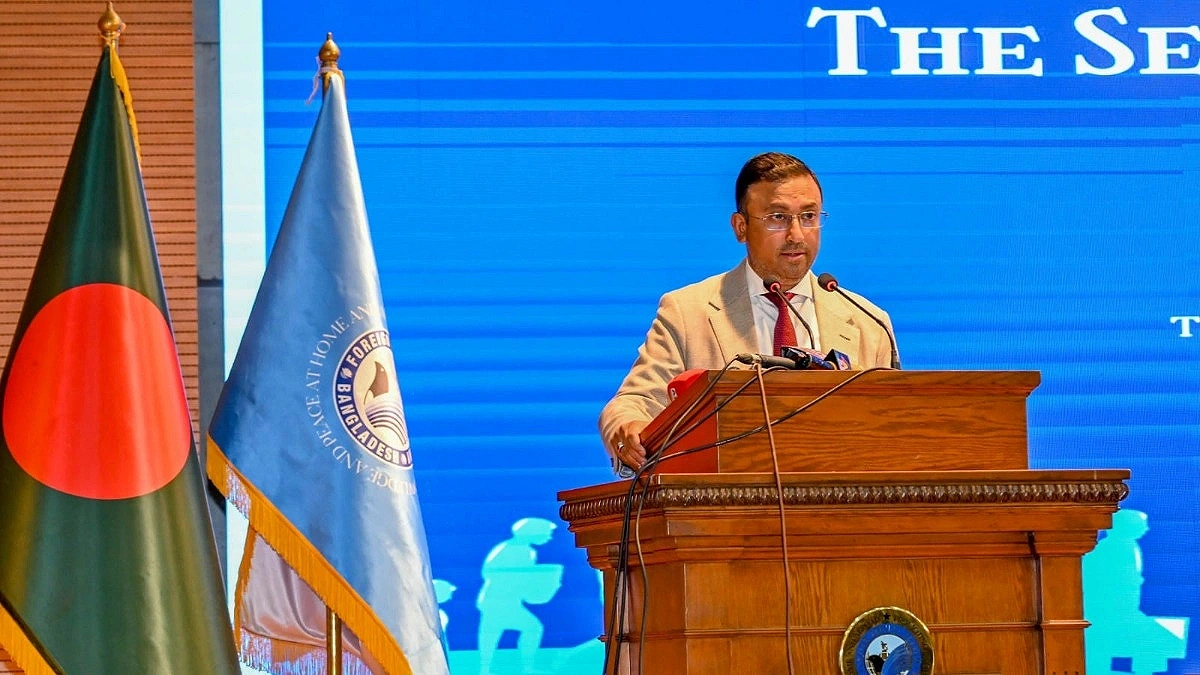
State Minister for Foreign Affairs, Humayun Kabir. Collected photo.
Bangladesh has been trying for nearly a decade to repatriate Rohingyas to their home country, Myanmar, but has not yet succeeded. Meanwhile, reports have emerged that Malaysia has started a process to send some Rohingyas back.
At an event at Foreign Service Academy, a reporter asked the junior minister Humayun Kabir: how is Malaysia able to do it when Bangladesh cannot? He said it was because Bangladesh had an undemocratic government for so long (that hindered repatriation).
Speaking to journalists today, Thursday, at a discussion event on the Rohingya crisis at the Academy, he said the Myanmar government knew the weaknesses of the Sheikh Hasina government. Therefore, the then government could not take a strong position in talks with them.
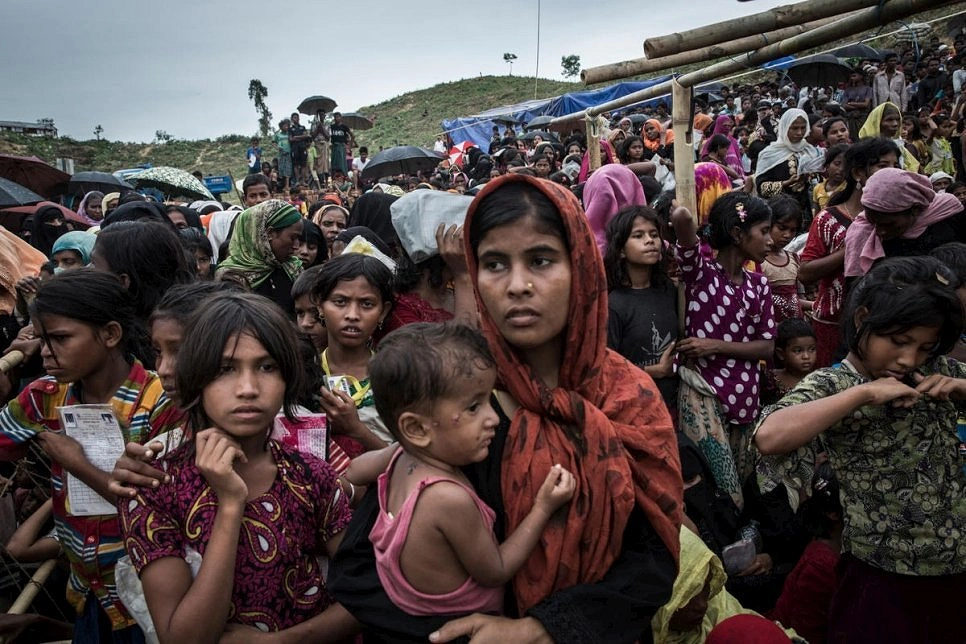
The history of Rohingyas, the Muslim population of Myanmar, taking shelter in Bangladesh after being persecuted in Myanmar dates back a long time. But after military operations began in Rakhine State in 2017, some 800,000 Rohingyas poured into Bangladesh.
Altogether, more than 1.3 million Rohingyas are now sheltering in refugee camps in Cox’s Bazar in Bangladesh.
In 2017, the Myanmar government signed an agreement with Bangladesh on the repatriation of Rohingyas. But after military rule began there, the process did not move forward. Since then, despite Bangladesh’s repeated urges, repatriation has not gained momentum.
Meanwhile, news has emerged that on September 29, the process of sending back nearly 1,500 of the 5,000 Rohingyas who took shelter in Malaysia to Myanmar is starting.
Citing this information, when a journalist asked a question, the state minister for foreign affairs said, “Malaysia had a democratic government. For the past 15 years, a democratic system was maintained there. As a result, although there were some challenges, a democratic electoral process was in place. We did not have any democratic process at all. Here, an authoritarian and repressive regime of Sheikh Hasina, who was ousted by the 2024 student-people uprising, was entrenched.”
(BSS file photo)
Explaining how this affected Rohingya repatriation, he said, “How will the outside world respect a government that takes away the rights of its own people? The Myanmar government also knew Sheikh Hasina’s weakness. They knew that she had no public support or legitimacy and that she was violating the human rights of her own country’s people. As a result, the then government did not have the opportunity to sit face to face at the table with Myanmar and speak from a strong position.”
However, Humayun Kabir expressed hope that now that an elected government has come to Bangladesh too, the work of Rohingya repatriation will gain momentum.
He said, “The Myanmar government has also congratulated our new government, and they have realized that this government has huge public support behind them. Therefore, unlike the illegal government of 15 years ago, they will have to give this government importance. With this strong position and public support, we will continue to work step by step, giving the highest priority to resolving this crisis.”
The junior minister said the Rohingya crisis would be addressed not only through bilateral initiatives but also through multilateral ones. “We will use the presidency of the 79th session of the UN General Assembly to once again reinforce the importance of this crisis on the multilateral world stage and in top forums such as the United Nations,” he said.
“Alongside this, we will also work with our bilateral partners—so that this crisis remains in everyone’s focus, the continuity of financial assistance is maintained, and a sustainable and peaceful solution is found that allows the Rohingya population to return safely and with dignity to Rakhine State.”
“We will work collectively on both bilateral and multilateral tracks so that Rohingyas can be repatriated to their own country step by step and a lasting solution can be found,” he added.
When a journalist asked about a specific timeline in this regard, Humayun Kabir said, “In such a complex matter, a specific timeline cannot simply be set suddenly. Patience is needed, but diplomatic efforts must be carried out at a rapid pace.”
A journalist pointed out that while the United Nations or international organizations continue to cite an unsafe environment in Myanmar regarding Rohingya repatriation, there has not been much reaction to Malaysia’s initiative.
It made Humayun Kabir laugh. “I am really surprised to see that today you are asking questions only about this one specific issue! You did not ask me even once about India or China!”
Highlighting the depth of the Rohingya crisis, he said Bangladesh opened its border for the sake of humanity and saved the lives of Rohingyas. But this crisis is not Bangladesh’s alone; it is a problem for the whole world. The international community cannot get by with only verbal sympathy; it must provide financial assistance and help resolve this problem with Myanmar. If this is not done, the crisis could spread across the entire region and beyond.