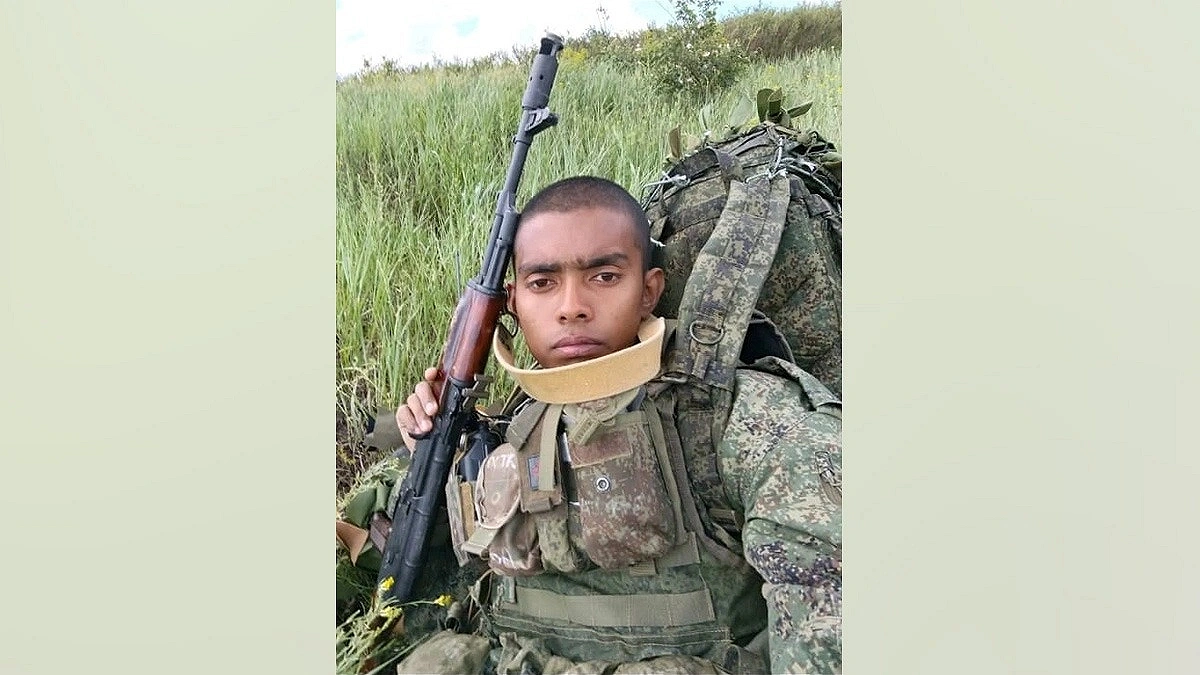
Not a Regular Job, Sold to Russian Army: How Rajon made it back home

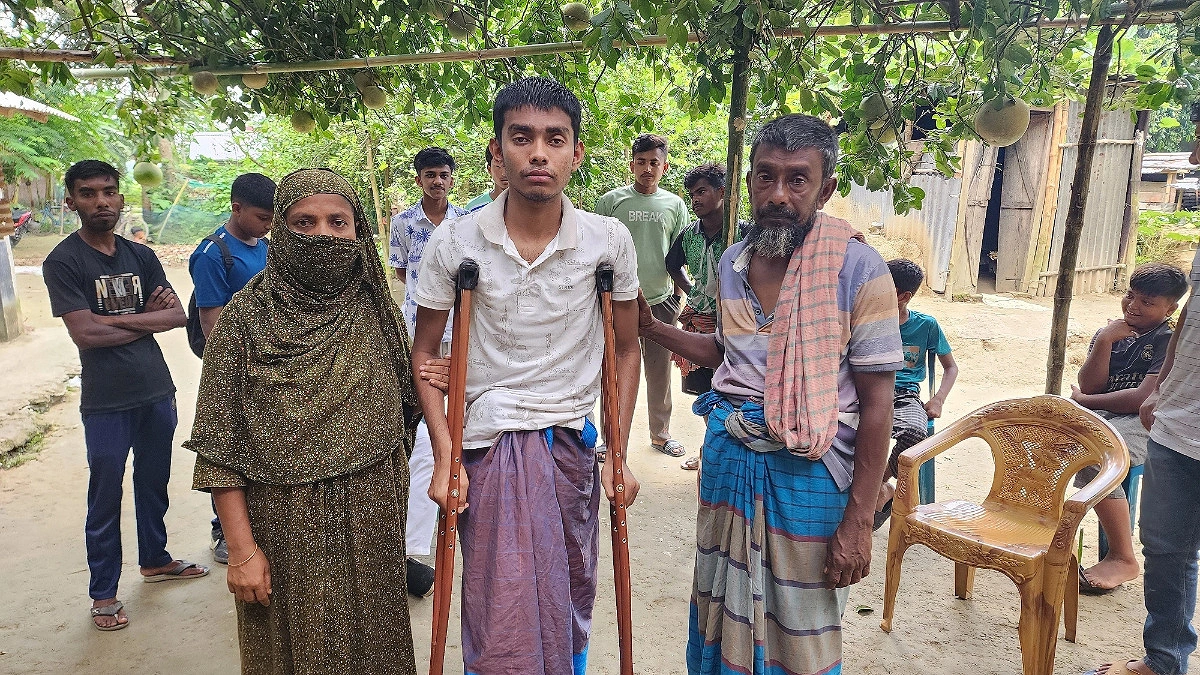
Rajan returns home disabled and stays with his parents. Agamir Somoy.
Rajon Hossain dreamed of bringing financial stability to his family. With that dream, he set off for Russia, hoping to join as a construction worker. But everything changed once he arrived. Instead of a job, he was handed over to the Russian army. Forced into service, he was sent to the battlefields of the Russia-Ukraine war.
On his very first day at the frontline, a drone attack left him critically injured. He lost all sensation below his waist. Yet he did not give up. For four days, dragging himself on his chest, he crawled four kilometres through the war zone. Eventually, he took refuge in a hospital. After a long course of treatment, Rajon finally returned home on 23 August—paralysed and confined to a wheelchair.
Rajon's family had spent nearly 10 lakh taka to send him abroad. To raise the money, his farmer father Abdul Kader sold land, took out loans, and borrowed from NGOs. They had invested everything in the hope that their son's future would change and prosperity would return to the household. Now, the family is burdened with debt, facing uncertain medical expenses for their paralysed son.
Rajon's family says he was promised a construction job with a monthly salary of 1.5 lakh taka and sent to Russia. But after arrival, local brokers handed him over to the Russian military. Around 30 other Bangladeshis were reportedly sent to the Russian army in the same manner.
Abdul Kader, a farmer from Goyeshpur village in Kaliganj upazila, has two sons and a daughter. He sent Rajon abroad to ease the family's financial hardships. Rajon was sent to Russia through Abu Taher Lentu of Ektarpur village and his nephew Sohel from the Railgate area of Jessore.
Trouble Began After Signing Papers
Rajon Hossain recalls that he arrived at Moscow airport from Bangladesh on 7 May this year. Along with about 30 other Bangladeshis, he was taken by bus from Moscow to Orenburg. They were kept in a hotel for three to four days. They were made to sign various documents under the pretext of issuing bank cards and SIM cards. That's when the trouble began.
According to Rajon, they were taken to a military camp, supposedly for work. After a day there, Russian army vehicles took them to a bunker. They refused to go to war and pleaded with the military personnel, but it was all in vain. Eventually, they were divided into groups.
"I was in a group of six. Later, we were given Russian army uniforms, weapons, and other combat equipment. After 21 days of training, we were sent to the frontlines," Rajon said.
"Drones Above, Mines Below, and Ukrainian Soldiers Ahead"
On the very first day on the battlefield, Rajon and his fellow Bangladeshis came under a devastating drone attack. He claims that 17 Bangladeshis were killed in that drone strike that same day. In the same attack, a drone struck him around his waist. He collapsed instantly, losing all strength below his waist. He could no longer stand. Then began his fight for survival.
Rajon recounts, "Over four days, dragging myself on my chest, I covered nearly four kilometres and finally took shelter in a hospital in Ukrainian territory controlled by Russia. During that time, I asked two Russian soldiers for water, but they refused. Worse, when I returned, the camp commander beat me. Drones above, mines below, and Ukrainian soldiers ahead—I cannot even begin to describe the horror."
He said that the medical care at the first hospital was inadequate. Later, he was transferred to a hospital in Russia. While undergoing treatment there, after 15 days, a doctor took him to the Bangladeshi embassy.
According to Rajon, he received a travel pass on 21 August and used 62,000 rubles sent by his family to purchase a plane ticket. He then flew back home on an Ethiopian Airlines flight, arriving at his residence in Kaliganj, Jhenaidah, on 23 August.
A New Battle Ahead
Now, Rajon faces a different kind of fight—not war, but survival. He has no strength below his waist and requires ongoing medical treatment. The loans taken to send him abroad remain unpaid, and now medical expenses have piled on top.
His family members say that having their son back alive is their greatest relief. But they are at a loss—uncertain about his future, how to afford his treatment, and how to repay their debts.
Rajon has alleged that he was sent to Russia through a Bangladeshi recruiting agency called Jabal-e-Noor. He has demanded that the agency and the local brokers be brought to justice under the law. He also appealed to the government for assistance with his medical care and compensation.
Local Outcry and Calls for Action
Rajon's relatives and local residents have accused Abu Taher Lentu and his nephew Sohel of luring him with false job promises and, in exchange for money, selling him to the Russian army. They have demanded a thorough investigation and strict legal action against them. They also urged the government to take firm steps to ensure that no other young man falls victim to such deception in the future.
Attempts were made to contact the accused Abu Taher Lentu, but his response could not be obtained. However, his wife claimed that her husband is involved in business and farming, and that her nephew Sohel is engaged in sending people abroad, with Lentu assisting him in that work.
Kaliganj Police Station Officer-in-Charge Md. Kabir Hossain said he had heard about Rajon's tragic case through various media outlets. He stated that if the affected family files a formal complaint, an investigation will be conducted and action will be taken against those involved.
He added, "Those who are involved in brokerage or human trafficking will not be spared under any circumstances."