
A Father’s Tears, Issue for Trial And a Departed Childhood

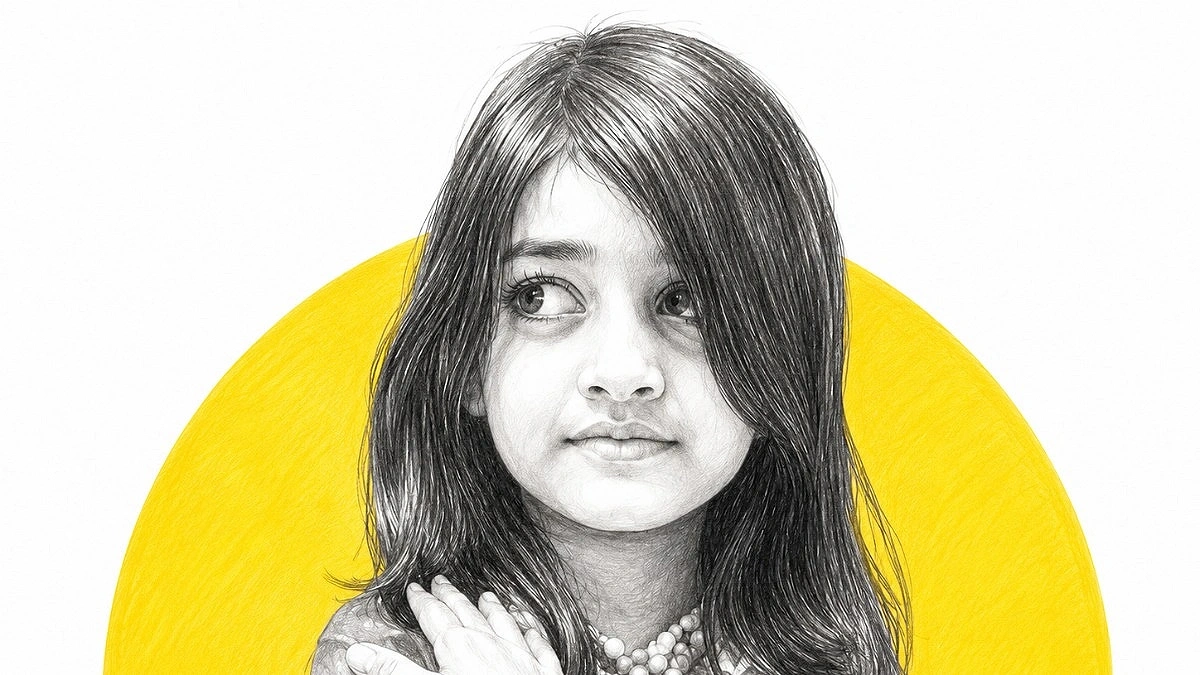
Graphics: Agamir Somoy
What is life like at eight years old? It is an age of colorful dreams, wild running around, and tugging at a mother’s clothes. At that age, Ramisa used to play every day right in the courtyard of her own building. A familiar environment, familiar faces, a safe place. Yet, it was in that very familiar space that a horrific fate awaited her that day.
A neighbor, Sohel Rana, tactfully lured little Ramisa into his apartment. Driven by substance abuse, he attempted to assault her. Failing in his attempt, he suffocated the innocent child to death. Later, to conceal the body, he and his wife, Swapna Akhter, even began hacking the corpse into pieces. The arrested couple, Sohel and Swapna, confessed to this terrifying incident themselves in their confessional statements before a Dhaka Metropolitan Magistrate.
One's hands tremble to write these words. Reading them makes the chest tighten with pain. A child who was supposed to spend her days with colored pencils and notebooks, whose dream might have been to become a teacher or a nurse—her life ended just like this. So cruelly.
From social media to news outlets, waves of grief for Ramisa are everywhere now. People are bursting with rage, demanding justice, and speaking out for fairness. Status after status is filled with the language of protest. Yet, amid this sea of grief and anger, one voice stands out, hitting deep inside the heart. It is the voice of Ramisa's father.
Abdul Hannan Molla, 55, buried his daughter on Wednesday in Sirajdikhan, Munshiganj. He has seen a lot in life. But he had no preparation to lose his beloved daughter like this—nor should anyone. Standing before the cameras, as soon as the question of justice was raised, he broke down sobbing and said, "Can you ensure justice? No, you can't. Can you set an example? No, you can't."
This father's tears are not just an expression of personal grief. It is the explosion of frustrations built up over years. It is the cry of a broken man who has no faith left inside. He knows the heat of this incident will last fifteen days at most. Then, some other major event will take over, media cameras will shift, and Ramisa's story will be buried.
There is no lie in his words. Incidents of child assault and murder are not new in the country. Every time, a storm brews in the media, people take to the streets, and justice is demanded. Then, gradually, everything dies down. Cases drag on endlessly, verdicts take years, or sometimes they never come. When an ordinary citizen loses faith in the judicial system after witnessing this reality repeatedly, they cannot be blamed.
Ramisa's father is not asking for justice because he cannot believe that justice will be served. This lack of expectation is actually the biggest indictment of all. When a father loses even the strength to demand justice for his child's murder, one must understand that something has broken deeply within the state and society.
Little Ramisa is no more. She is in an eternal sleep beneath the earth. Perhaps she has no fear now, no pain. But for those who loved her, for the one who cooked her meals every day, for the one who carried her on his shoulders to school—their pain is going nowhere. Every dawn will remind them of a smiling face that will never be seen again.
Her father’s questions remain floating in the air, unanswered. The responsibility to answer those questions does not lie with the court alone. That responsibility belongs to us, to this society, to this state. Ensuring justice for Ramisa means sending a message that on this soil, every child’s life matters. That they are safe. Will we be able to deliver that message?
