


Call for forming a commission to stop sexual abuses in Madrasas: Sheikh Ahmadullah

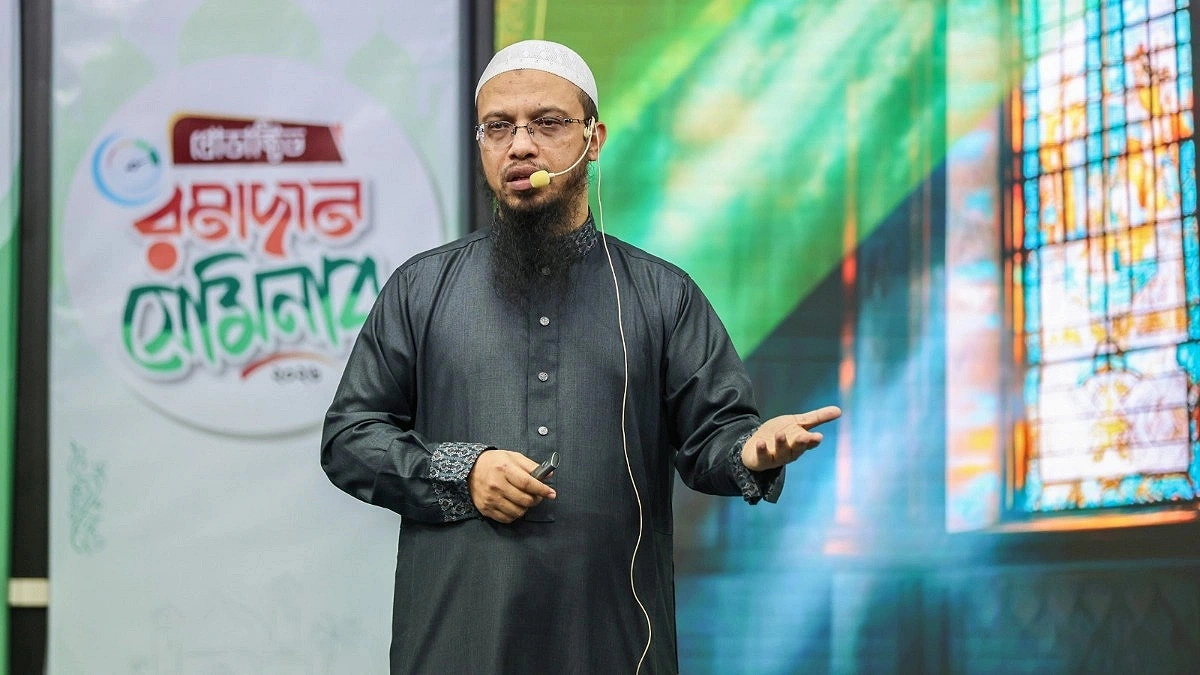
Shaykh Ahmadullah urges authorities to form a commission to stop rape, especially in Madrasas. Collected Photo.
Islamic scholar, speaker, and social activist Shaykh Ahmadullah has called for practical measures to prevent incidents of sexual abuses in residential madrasas.
He said such allegations cannot simply be denied and stressed that the problem must be addressed openly instead of being ignored.
In a recent Facebook post, he said that he is currently on a Hajj trip and therefore unable to speak in detail on the issue at the moment, but plans to present specific proposals and work on the matter after returning to the country.
Shaykh Ahmadullah pointed out that he was at Dhaka airport on his way to Hajj when the widely discussed case involving Ramisa occurred. Later, he learned about another incident involving a madrasa at Banasree in Dhaka while en route. After arriving in Saudi Arabia, he was unable to focus on the issue in detail due to the busy schedule of Umrah and other engagements.
The Islamic speaker said that perpetrators of rape must face swift legal action and punishment, regardless of whether they are associated with a madrasa or any other institution.
In his post, he stated that cases of sexual misconduct do occur to varying degrees in residential madrasas and that this reality cannot be denied. At the same time, he also claimed that in some cases there are media exaggerations or attempts to implicate innocent religious scholars.
He said he had submitted a written set of recommendations back in 2019, which included proposals such as installing CCTV cameras in every classroom, providing teacher training, arranging family housing for teachers, separating classrooms from residential areas, ensuring separate beds for students, and prohibiting the recruitment of male teachers and staff in female madrasas.
Shaykh Ahmadullah added that while such allegations are less common in large and well-known madrasas, complaints are more frequently reported in smaller, less regulated institutions.
To prevent such incidents, he proposed forming a commission under the highest authority of the Hayatul Ulaya Lil Jamiatil Qawmia Bangladesh, consisting of scholars and experts. According to him, the commission would investigate complaints on-site, ensure legal action against proven offenders, and maintain a blacklist to prevent them from being employed in any madrasa in the future.
He further stated that false allegations should also be brought before the public so that genuine incidents can be distinguished from conspiracies.
He concluded by calling on everyone to work together to protect the reputation and public trust of the madrasa education system.

