
No legal scope to issue passport to Hasina: ICT chief prosecutor

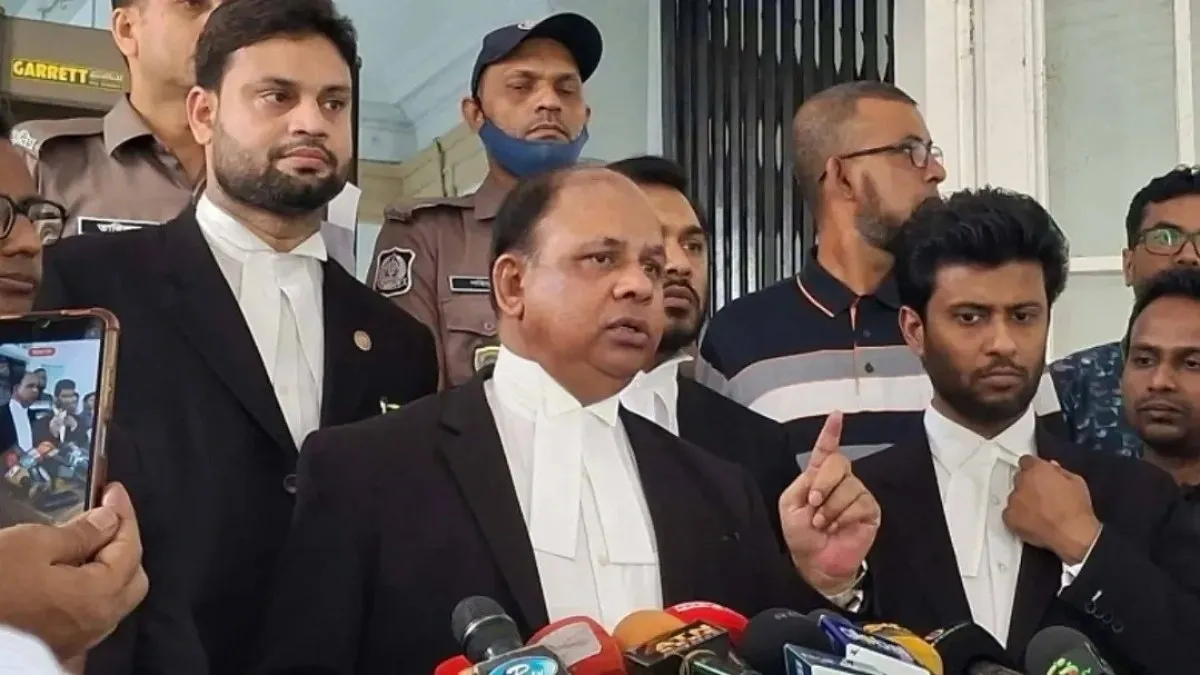
Collected Photo
International Crimes Tribunal (ICT) Chief Prosecutor Aminul Islam said there is no legal scope for Bangladeshi government to issue a passport to fugitive convict Sheikh Hasina.
He made these remarks on Tuesday during a press conference in front of the ICT.
Aminul added that passports are issued to anyone according to the Bangladesh Passport Order, 1973, where Article 6 and 7 are highly relevant. He noted, “In Article 6, it is said if an accused is convicted, and when he is seeking the passport, if he has been convicted within five years prior to that, and if the quantum of that sentence is at least two years, the passport authority will not issue any passport to him.
“Similarly, Article 7 said the passport of a person convicted due to moral turpitude can be seized or revoked.”
Regarding the passport application of ousted prime minister Sheikh Hasina, he said, “Hasina is convicted and sentenced to death by the ICT. She is convicted of crimes against humanity. These crimes against humanity are what is called moral turpitude, and due to this offense involving moral turpitude, the Government of Bangladesh has quite rightfully cancelled her passport. And Clauses (a), (b), (c), and (e) of Article 6 of the Passport Act said since she is convicted, the passport authority no longer has any jurisdiction to issue a passport to any convicted person.”
Regarding Hasina’s return to Bangladesh, he added, “We hear statements on social media. Many say she has the right to come to Bangladesh. An ordinary citizen has the right to go outside Bangladesh and the right to enter Bangladesh from any foreign country. Article 36 of our Constitution has granted that right to that citizen.
“But Article 36 is never applicable to any convicted person or absconding person. Hasina has been living as a fugitive even prior to her conviction. An arrest warrant has been issued against her to bring her back to Bangladesh, and other related measures have been taken against her, including publishing notices in newspapers. She has avoided coming to Bangladesh to face these cases.”
According to the chief prosecutor, “Clause (e) of Article 6 of the Passport Act said if an accused avoids proceedings against them or remains absconding, no passport can be issued on their behalf. So, what is claimed by citing Article 36 that she has the right to come to Bangladesh, I think is a misleading statement. This is probably not a correct statement.
The law clearly said if there is a minimum sentence of two years, a passport can no longer be issued to that person. Therefore, there is no legal scope for the Government of Bangladesh to issue her a passport.
Regarding the application process for Hasina’s passport, the chief prosecutor added, “Since yesterday, a matter has been circulated that a London-based law firm named Matrix Chamber sent a letter to our Indian Embassy. They applied for a passport on behalf of Hasina. Our Foreign Minister rightly remarked that this is hilarious because the person who wants the passport did not apply herself, nor did her party make this application on behalf of the person who wants the passport.
“The application was made by a London-based law firm. So, for this London-based firm, their client resides in India while the lawyers are in London. They are not presenting any copy of the legal agreement between that law firm and Hasina. If there is no agreement on behalf of a client, how can such a so-called law firm claim her as a client and apply for a passport on her behalf?”
He noted, “This is unknown to me, and there is no such provision or opportunity under the law. The person who applies for a passport must submit the application themselves. Since Hasina is convicted, she has not submitted any application to the government.
“We have not yet officially received any documents saying Hasina is in India. The Government of India said based on Hasina’s request, she was granted shelter there on humanitarian grounds. If Hasina wants to return to Bangladesh, I believe she must say in writing to the Government of India.”
