
Justice has a deadline, yet why do cases remain unresolved?

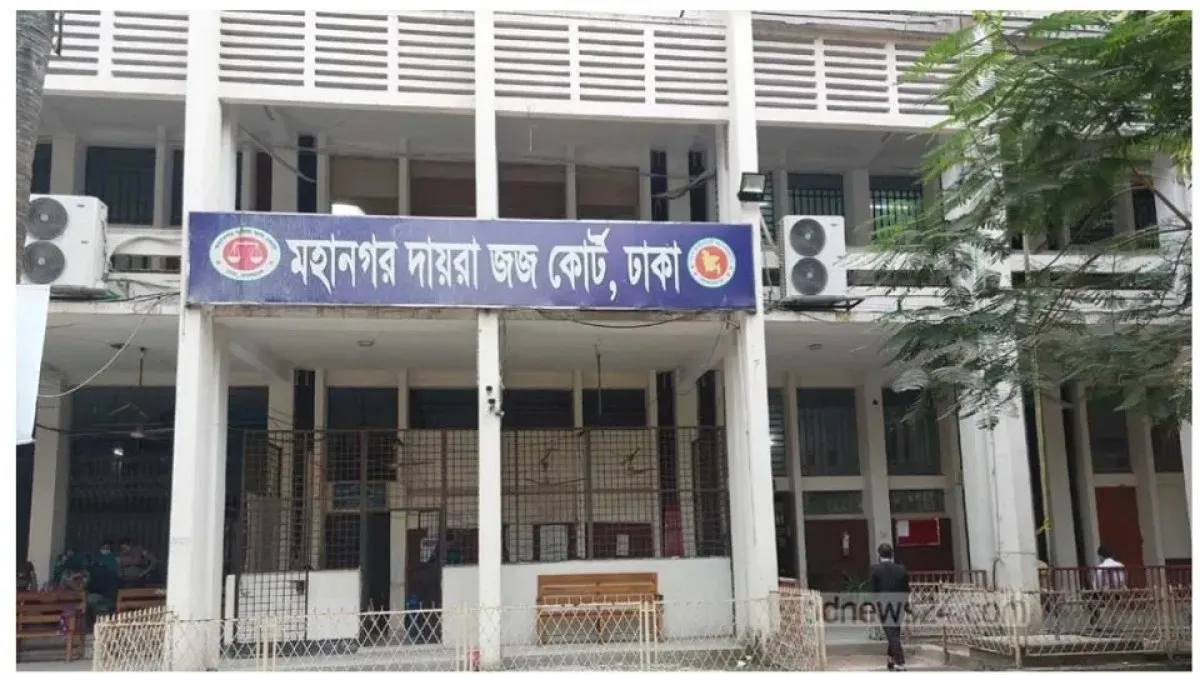
Representational image. Collected.
Nearly a decade and a half ago, a young woman named Nazma (pseudonym) had gone missing while going to work at a garment factory at Kamrangirchar. It was later learned that she had fallen into the clutches of a human trafficking ring and was confined in a house at Khilgaon.
Twenty days after her disappearance, police rescued the young woman on June 10, 2010. A case was filed under the Human Trafficking Act.
The law stipulates that the trial of a human trafficking case must be completed within 180 working days. If not, a report explaining the reasons must be sent to the High Court.
But what happened in reality? The charge sheet was submitted in 2010. The trial began in 2014. In the meantime, the accused obtained bail and fled.
The last testimony in this case was recorded on May 29, 2016. Since then, nine long years have passed. No further testimony has been recorded.
In another case, a case was filed under the Women and Children Repression Prevention Act over the rape and murder of a student of an English-medium school in Kalabagan in the capital. In that case, after his arrest, Iftikhar Fardin Dihan gave a confessional statement under Section 164 on January 8, 2021. The investigation found the allegations against him to be true.
Dihan's trial began on February 16, 2022. However, as per law, the trial of this case was not completed within 180 days.
Currently, the case is at the stage of material evidence collection. Although Dihan sought bail multiple times, it was not granted. He remains in custody.
Not just one or two, but hundreds of thousands of cases are pending in the lower courts in similar manner. Time has passed. But they have not been disposed of. As a result, victims are not getting justice. Offenders are getting away and becoming involved in new crimes.
According to Supreme Court data, as of last March, 4,791,921 cases were pending trial in the country. However, no accurate account is available of how many of these were not completed within the stipulated time.
Legal experts say crime is increasing pushing cases to rise parallelly. But the capacity of the judicial system is not increasing. Three to four thousand cases are pending on each judge's shoulders. As a result, the backlog of old cases is not being cleared. Even though time limits are set in law, no benefit is being gained due to the growing backlog.
Several reasons for this emerged in discussions with experts. According to them, the longer time passes, the harder the trial becomes. Witnesses cannot be found. Even if found, they forget the events. Many witnesses are afraid to come to court for giving testomonies.
Experts said the accused take advantage of this opportunity. According to them, due to prolonged trials, the accused obtain bail and go into hiding. Sometimes neither the plaintiff nor the accused live to see the trial through. Death occurs before the trial ends. Then the future of the case becomes uncertain.
Experts claim that cases should be disposed of within a reasonable time to serve justice. This is so that people do not develop a negative perception of the judicial system. At the same time, the judicial system must be brought to a place of trust and confidence.
Experts said that if any incident creates a stir across the country, it receives special attention, while the rest remain in the shadows. According to them, this is the scenario most of the time.
They urged breaking out of this culture. They said everyone must be given equal importance under the law.
At the same time, legal experts opined that it is not enough to take initiatives to increase capacity to advance judicial proceedings — they must be properly implemented.
What the Law Says About Trial Time Limits
According to Bangladesh's Code of Criminal Procedure (CrPC) and existing laws, there is no legally fixed time limit for completing the trial of a case under Section 302 of the Penal Code (murder cases). However, it is stated that the trial should be completed as quickly as possible. But there is no definition of "as quickly as possible."
Similarly, there is no provision specifying exactly how many days the judicial proceedings under the Arms Act must be completed.
However, in the case of special law cases, time limits have been specified.
According to Section 20(3) of the Women and Children Repression Prevention Act, 2000, the tribunal shall complete the trial within 180 days. If unable, it may extend the time by 30 days, and the reason must be recorded. However, notwithstanding anything contained in sub-section (3), sub-section (3A) provides that the trial of a rape-related case under Section 9 shall be completed by the tribunal within 90 working days from the date of framing of the charge. Once the hearing of a case begins in the tribunal, it shall continue continuously on every working day until it is concluded.
According to Section 10 of the Speedy Trial Act, 2002, the trial must be completed within 90 days. If not, a further 30 days. In total, it must be completed within 135 days.
According to Section 24(1) of the Human Trafficking Prevention Act, 2012, the tribunal shall complete the trial within 180 working days of the framing of the charge. Failure to complete the trial within this time limit shall not invalidate the trial, but the tribunal shall send a report to the High Court Division of the Supreme Court within ten working days explaining the reasons for its inability to complete the trial.
According to Section 51 of the Narcotics Control Act, 2018, the trial must be completed within 90 working days from the date of receipt of the case for trial. If this is not possible, the trial may be completed within an additional 30 working days. In this case, the Supreme Court must be informed in writing, with a copy sent to the government.
If the trial cannot be completed for any reasonable cause even within the extended period, a further 15 working days may be extended. The trial must necessarily be completed within the extended period.
What Those Concerned Are Saying
In this regard, Supreme Court lawyer Ishrat Hasan told Agamir Somoy, "Under Section 339C of the Code of Criminal Procedure, where applicable, there is a provision to complete the trial within 180 days in the Magistrate's Court and within 360 days in the Sessions Court after receiving the case for trial. Even though time limits exist, the problem of trial delay cannot be solved without effective measures for their implementation. Articles 27 and 31 of the Constitution guarantee equal protection and benefit of the law. And Article 35(3) recognizes the right of a person accused of a criminal offence to a speedy and public trial. Therefore, ensuring timely trial is directly related to the state's constitutional responsibility."
This lawyer opined that if a person litigates for 10–15 years and still does not get redress, then justice becomes meaningless to them.
This lawyer suggested increasing the number of judges and support staff to eliminate the case backlog. She also emphasized developing the efficiency of investigation and prosecution. She urged ensuring the presence of witnesses as well.
Dhaka Metropolitan Sessions Judge's Court Public Prosecutor (PP) Omar Faruk Faruki sees the responsibility for the case backlog in the previous government. He claims that the previous fascist government (Awami League) was busy with political cases. This lawyer alleges that they interfered with the establishment of justice.
That interference is now a thing of the past, and the current government has taken various initiatives to restore people's confidence in the judiciary, said Omar Faruk Faruki. He said that a list of old cases has already been prepared and steps have been taken for their speedy disposal.
Faruki hopes that the benefits of the government's initiative will be realized soon. In his words, "We believe that the case backlog will decrease in a short time. At the same time, victim families will get justice."
