
Bangladeshi Captain Trapped in Hormuz: "It Feels Like We Are Stuck in a Pond"
- 20,000 sailors trapped in Hormuz due to war
- Bangladeshi ship sailors also in trouble

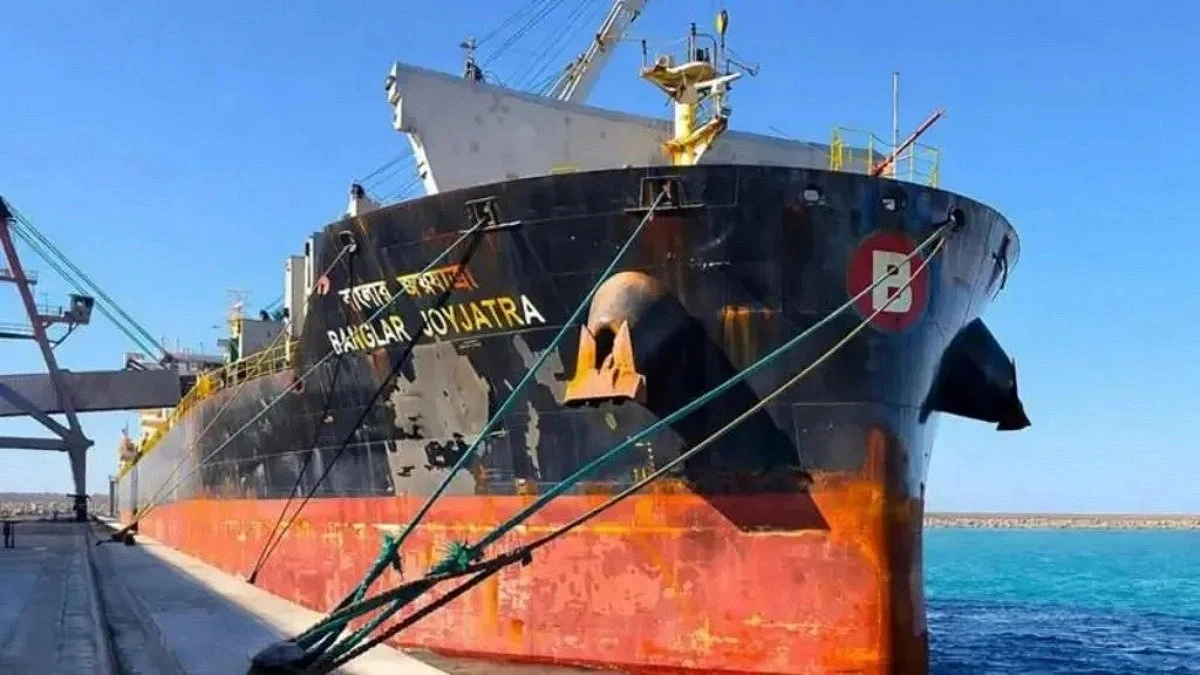
The Banglar Joyjatra, which started its journey from Bangladesh in late January, is currently anchored at the port of Sharjah in the United Arab Emirates. Collected photo.
The war in the Middle East has not only affected land but has also plunged global maritime trade into a deep crisis. With the Strait of Hormuz effectively closed, nearly 20,000 sailors aboard about 1,600 ships remain stranded in a state of blockade.
Among those facing the greatest uncertainty is the Bangladeshi vessel Banglar Joyjatra. The ship, carrying 37,000 tons of fertilizer destined for South Africa, has repeatedly failed in its attempts to exit the strait. It has now been waiting for three months for open sea passage.
Captain Shafiqul Islam of Banglar Joyjatra said: "It feels like we are stuck in a pond. The only way out of here is the Strait of Hormuz."
Captain Shafiqul, whose ship is carrying the large fertilizer consignment, attempted to cross the strait twice after the war began. Both times, he was forced to turn back.
After a ceasefire was announced on April 8, he learned that one ship had received permission from the Islamic Revolutionary Guard Corps (IRGC). He then set sail along with four other vessels. However, shortly afterward, they were warned to turn back.
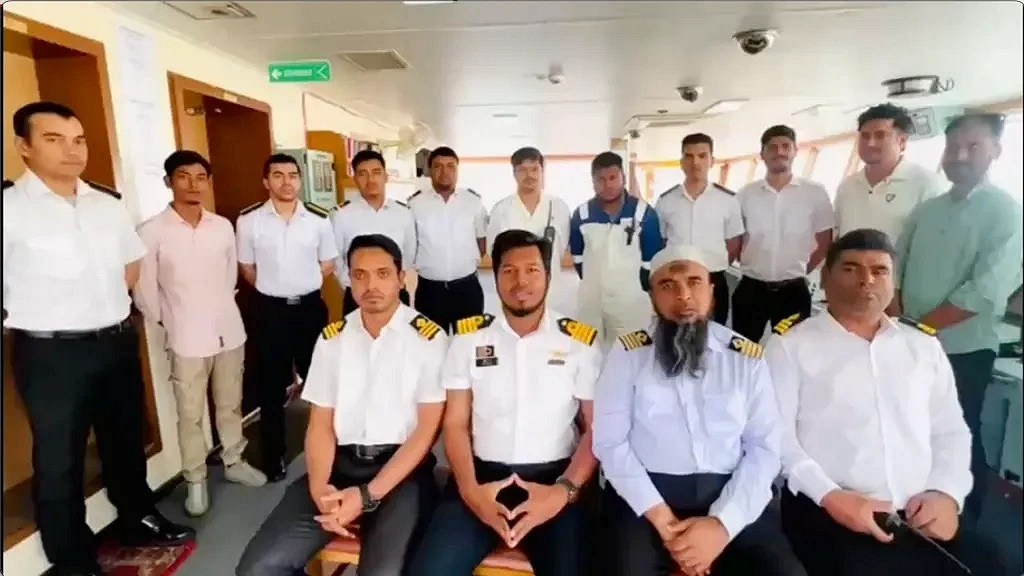
(Captain Shafiqul Islam (front row, second from right) and Chief Engineer Rashedul Hasan (seated to the left of the captain) of the Banglar Joyatra ship record a video message to boost the morale of the sailors.)
Nine days later, Iran announced that the strait would be opened for commercial shipping, but later withdrew that decision. As a result, Banglar Joyjatra was once again forced to return.
Due to security concerns, many ships are now anchored outside various ports or off the coast. However, besides food shortages, a crisis of drinking water is growing. Although supply services from Dubai, Abu Dhabi, and Kuwait remain operational, deliveries are uncertain.
Rashedul Hasan, the chief engineer of Banglar Joyjatra, reported that the price of water has increased more than any other commodity. He said: "Two days ago, we bought about 180 tons of water for the ship. Before, the price would have been $1,500 to $2,000. Now it is $11,000."
Like Rashedul Hasan, Pakistani sailor Hassan Khan is also trapped in the strait. He said that the sea is sometimes so calm that he forgets he has been stuck in the middle of a war zone for three months. The sailor, who did not wish to use his real name for security reasons, added: "Everything outside may seem normal, but the minds of the people inside are not at peace at all."
Although the situation in the Persian Gulf may appear normal on the surface, the reality is starkly different. Since late February, due to the war between the United States, Israel, and Iran, approximately 20,000 sailors—including Captain Khan—have been trapped inside or near the Strait of Hormuz.
This waterway, one of the busiest in the world, used to carry nearly one-fifth of global oil and gas supplies. But now, missiles fly overhead, and mines have been laid beneath the sea. As a result, this vital maritime route has come to a near-complete standstill.
Despite the circumstances, the crew of Captain Khan's vessel continue trying to maintain a normal routine. However, even with limited opportunities to go ashore, no one wishes to leave. The once-lively spaces for socializing have been replaced by anxiety and silence. Many are startled even by the sound of mobile phones.
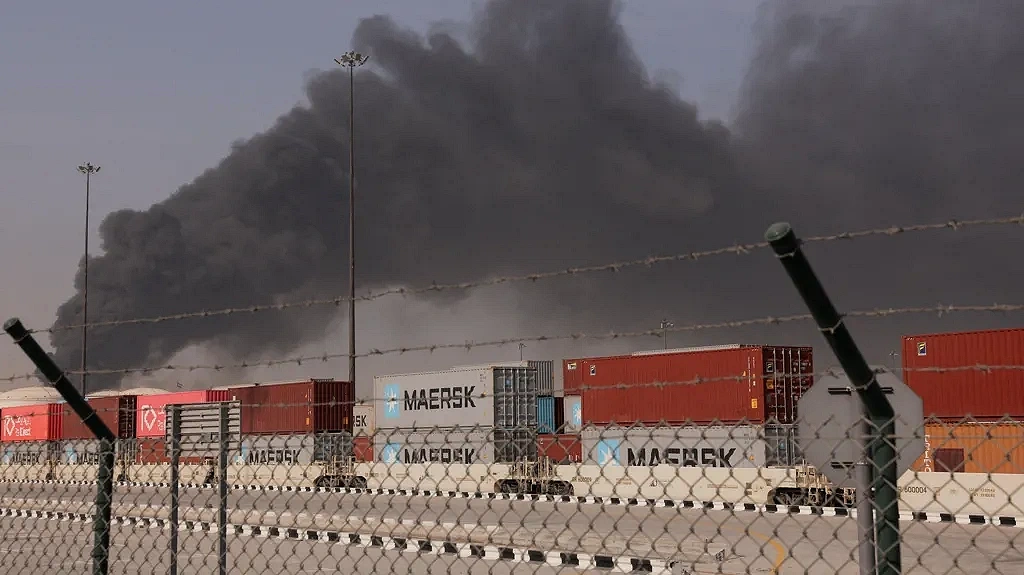
(In response to the US and Israeli attacks, Iran retaliated by launching strikes on several Gulf countries, including the United Arab Emirates' Jebel Ali port.)
Captain Khan said: "The pressure is constantly working in our minds. Everyone is physically and mentally exhausted."
The International Maritime Organization (IMO) has reported that approximately 1,600 ships are currently trapped inside the Strait of Hormuz. Iran closed the strait just days after the war began. No vessel is allowed to pass through without special permission.
A Korean sailor, who wished to remain anonymous, alleged that some food and water supply companies are exploiting the situation for excessive profits. As summer approaches, trapped ships need even more water. Temperatures in May have already exceeded 30°C, and could rise to 45°C.
Captain Khan said that they still have food and water, but supplies are much more limited than before. While meat is available, obtaining vegetables and lentils has become difficult.
Captain Shafiqul Islam still considers himself fortunate. On the second day of the war, his ship was only 200 meters away from the Jebel Ali Port in Dubai when Iranian attacks were launched in that area.
He said: "Since then, he and his 30 crew members have witnessed numerous attacks. Sometimes missiles flew over a ship, and other times they saw wreckage lying next to a nearby vessel."
Rashedul Hasan said: "When attacks continued through the night, none of us could sleep. We have seen the horrors with our own eyes."
According to IMO data, in 39 verified incidents so far, at least 11 sailors have been killed, and one remains missing.
Although tensions have eased somewhat following the ceasefire, military activity in the strait continues unabated. Many sailors are regularly witnessing drones, fighter jets, warships, and submarines.
Sajid Masood, a Pakistani cook working on an oil tanker, said: "The warships use bright lights at night. Announcements are made over loudspeakers. Our captain believes the purpose is to ensure no one can cross the strait. That is why these measures are being taken."
Meanwhile, due to the prolonged stranding, the contracts of many sailors are running out. Industry stakeholders fear that even after the war ends, it may become difficult to find sufficient manpower.
Kamil, a Pakistani sailor, said: "This crisis has shown just how risky the seafaring profession can be. In the future, many people may rethink this career."
Sajid Masood has also begun to doubt whether he wants to continue working at sea. He has only one month left on his contract. But above all else, he wants to return home. He dreams of bringing a Barbie doll for his daughters and a toy plane for his son when he finally reunites with his family.
He said: "I had thought I would return home soon. But I am still trapped. Every day, my family asks me when I am coming back. But I have no answer for them."
