
New momentum in talks on Prime Minister's India visit
- According to a state minister, several conditions have been set for New Delhi to create a favorable environment. India has already responded positively to some of these conditions.

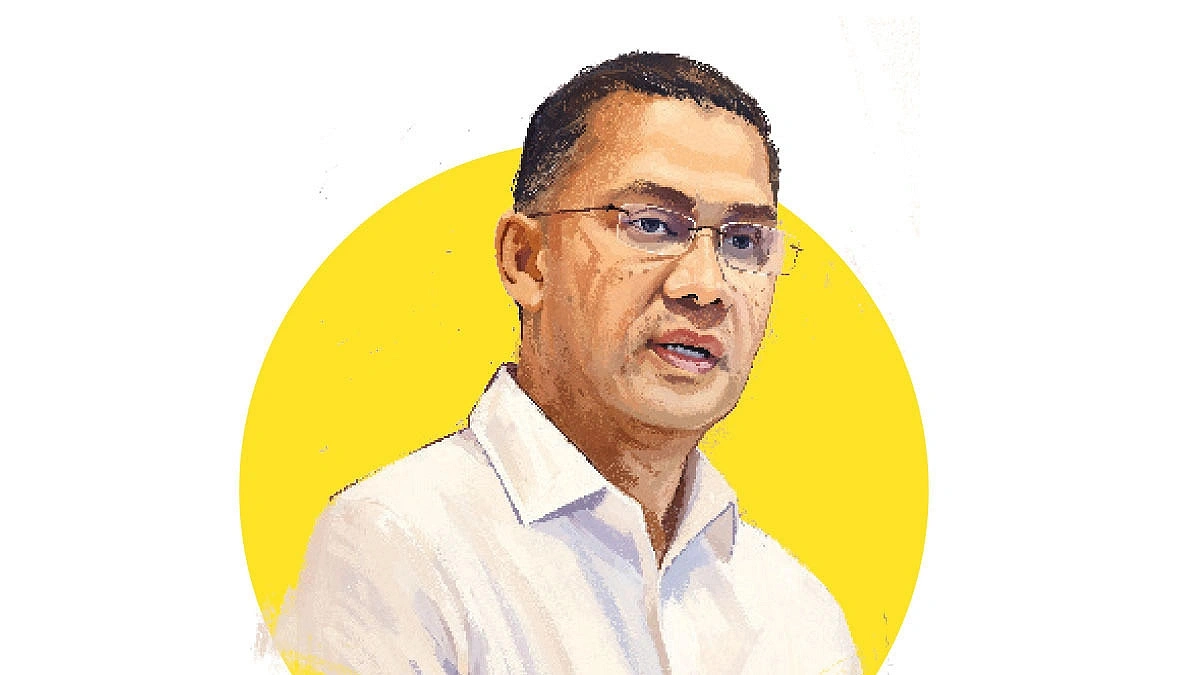
Graphics: Agamir Somoy
Prime Minister Tarique Rahman's visit to India has come up for fresh discussion. Although Bangladesh has not yet confirmed a specific date for the Prime Minister's Delhi visit, Indian media outlets are reporting that he will be travelling to India soon. A Bangladeshi minister said, "We have set several conditions for New Delhi to create a conducive environment. India has already conceived some of those conditions positively."
Despite the ongoing dispute between the two neighbours, over the extradition of Sheikh Hasina, who took shelter in India after being ousted in the student-public uprising of 2024, Indian media outlets The Indian Express and Outlook have reported that Prime Minister Tarique Rahman's Delhi visit is likely. They claim that Tarique Rahman may stay in New Delhi from 23 to 25 August.
The Prime Minister's Foreign Affairs Advisor, in an interview with the state-run news agency BSS, said that the visit should not be rushed; rather, Prime Minister Tarique Rahman's India visit can take place only when a suitable environment is created based on mutual trust, confidence, respect for sovereignty, diplomatic dialogue, and a respectful invitation proposal between the two countries.
Humayun Kabir said, "Although Indian media has been buzzing about the PM's visit before the BRICS summit scheduled for 12–13 September in New Delhi, Bangladesh has adopted a policy of not rushing at this moment while leaning towards clear national interests."
"However, if a suitable environment is created based on consensus between the two countries, Dhaka will express a positive attitude regarding participation in the upcoming BRICS summit," he added.
He did not directly specify how such a "conducive environment" could be created. But from Dhaka's side, it is being said that Sheikh Hasina, who has been sentenced to death for crimes against humanity, and in other incident, the accused of the murder of Sharif Osman Hadi, spokesman of the Inqilab Manch, must be handed over.
Humayun Kabir said, "The bilateral relations between the two countries and the top-level visit of Bangladesh's head of government depend on a change in the mindset or perspective of India's current leadership. The neighbouring country must properly understand the reality of the July mass uprising in Bangladesh, which came about through the sacrifice of over 1,500 people."
Since coming to power after winning the February election, the new BNP government's Prime Minister Tarique Rahman's first Delhi visit has been under discussion between the two neighbours for several weeks. During the regular briefing yesterday (Friday), when responding to journalists' questions, Indian Ministry of External Affairs spokesperson Randhir Jaiswal said that India had no comment to make regarding the visit.
Notification Issued and Then Withdrawn Over Prime Minister's India Visit Preparations
On that day, a notification hinting at preparations for Prime Minister Tarique Rahman's India visit was issued, but it was later withdrawn. Against the backdrop of tensions over Sheikh Hasina's extradition and uncertainty surrounding Tarique Rahman's visit, this move by India yesterday has sparked fresh discussions.
The government of Prime Minister Tarique Rahman, which came to power six months ago, has been making efforts from the very beginning to maintain good relations with India. Amid talks between the two countries over Tarique Rahman's possible Delhi visit, Dhaka indicated last week that a more conducive diplomatic environment was needed for the visit.
Soon after Tarique Rahman came to power, Narendra Modi's government had invited him for a bilateral visit. Additionally, Prime Minister Tarique Rahman has also been invited to the outreach session of the BRICS summit scheduled for September in Delhi, in his capacity as the current chair of BIMSTEC.
The Bangladesh government has not made any clear statement regarding whether the Prime Minister will attend the BRICS event. However, in the first week of August, Foreign Minister Khalilur Rahman's remarks indicated that greater importance was being given to a bilateral visit rather than BRICS. On 14 August, diplomatic and political sources in Dhaka and Delhi said that the likely dates for the Prime Minister's visit could be 22–23 August—exactly one week after India's Independence Day.
The Prime Minister's Office and the Ministry of Foreign Affairs had not yet made any official announcement at that time. Officials also declined to speak on record. However, Indian media outlets began publishing reports on Tarique Rahman's possible visit.
Government sources in Dhaka then said that preparations for the Prime Minister's first visit to the neighbouring country were quietly but certainly moving forward. A source at the Ministry of Foreign Affairs said that Foreign Minister Khalilur Rahman would fly to the United States on 27 or 28 August to preside over a UN session. Before that, he would join the Prime Minister on the India visit.
In the midst of this, on 5 August, the second anniversary of the mass uprising, Sheikh Hasina—who has taken shelter in India—delivered a venomous attack against the interim government and the current BNP government through a virtual connection at a press conference in New Delhi. Not only that, she also announced again that she would return to the country in December.
Dhaka was extremely angered by the opportunity given to Sheikh Hasina to speak at that event. After expressing its angry reaction that day, Dhaka laid down conditions for creating a conducive environment for Prime Minister Tarique Rahman's Delhi visit, including the extradition of Sheikh Hasina and the two accused in the murder of Sharif Osman Hadi. Since then, although India has repeatedly emphasised the visit and taken various initiatives, Dhaka has still not given its consent. Against this backdrop, the issue of the Prime Minister's visit has once again come into the spotlight.
Commenting on Prime Minister Tarique Rahman's India visit, international relations expert Professor Imtiaz Ahmed said that bilateral relations between two important neighbours should not be held hostage to a single issue (Sheikh Hasina). He said that there are many other issues for discussion and negotiation between the two countries, and those should be given importance.
Professor Imtiaz Ahmed believes that important issues such as border problems, water sharing, the informal economy, trade imbalances, and many other areas are there to be discussed. He opined that if the Prime Minister does not go on the visit, none of these issues will be resolved.
