
Why Tarique Rahman is drawing attention ahead of the BRICS summit

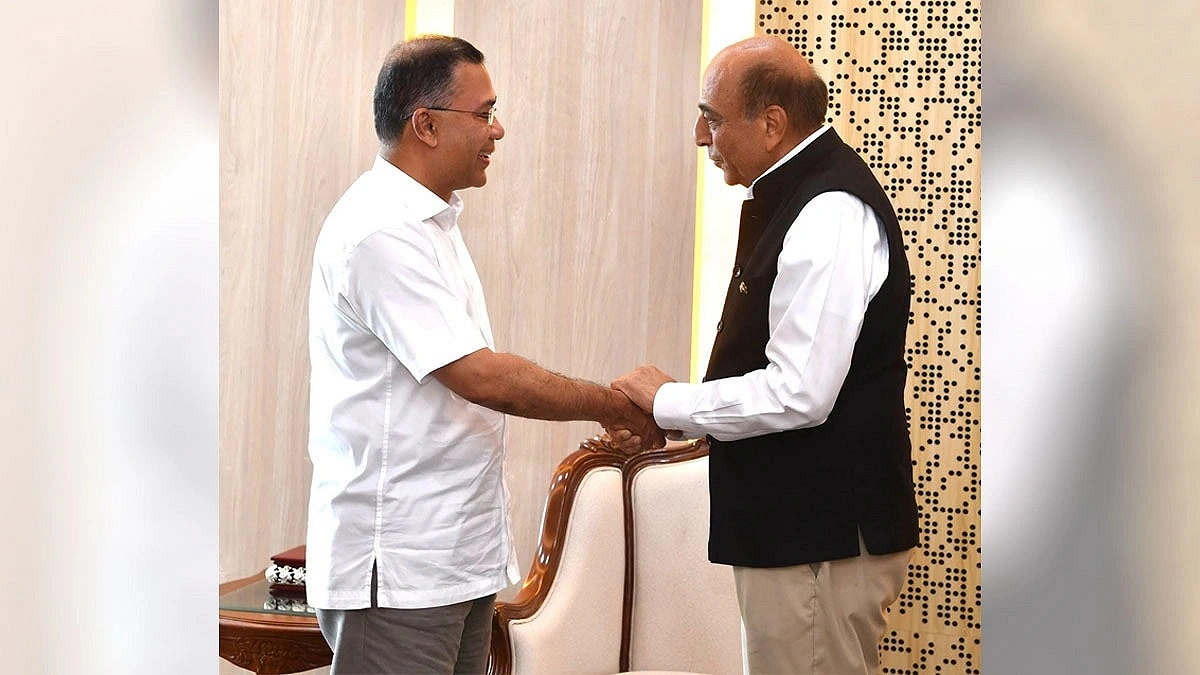
Indian High Commissioner Dinesh Trivedi. Photo: PMO
The 18th BRICS Summit is scheduled to take place in New Delhi on September 16 and 17. This is the fourth time India has assumed the group’s presidency. However, the main focus this time is less on the summit itself and more on the outreach sessions. Bangladesh Prime Minister Tarique Rahman’s decision regarding a visit to India has added another dimension to the discussion.
After a meeting with the Indian high commissioner on Monday, Foreign Minister Dr. Khalilur Rahman was asked whether there had been any discussion about Tarique Rahman’s visit to Delhi. He said, “We have not made any decision on this yet.” Asked again about the India visit, the foreign minister said, “First, I am not a fortune teller. Second, the prime minister was not personally invited by BRICS; he was invited as the chair of BIMSTEC. You should understand this subtle difference.”
Following objections from Dhaka, Indian Ministry of External Affairs spokesperson Randhir Jaiswal addressed the issue at a news conference in Delhi today. He said, “Immediately after assuming office, Prime Minister Tarique Rahman was formally invited to visit India. At the same time, Bangladesh, as the current chair of BIMSTEC, has also been invited to participate in the BRICS outreach session.”
However, Dhaka has yet to confirm Tarique Rahman’s visit to India. As a result, various rumors have emerged over the uncertainty surrounding his decision to attend the summit.
Khalilur Rahman said, “Immediately after the new government was formed, Indian Prime Minister Narendra Modi sent a letter, which was handed over that same day. There is already an invitation.” This means Tarique Rahman now has two invitations before him. Despite this, there is still no clarity over the visit. If the visit takes place, a bilateral meeting between the two countries is also expected to be held alongside the summit.
Randhir Jaiswal had earlier told journalists, “Immediately after the Bangladesh prime minister took office in February, he was formally invited to India for a bilateral visit. And in the case of the BRICS summit, as the current chair of BIMSTEC, he was given a separate invitation to participate in the outreach session to be held in Delhi. This invitation follows the practice observed for BRICS outreach sessions. Similarly, the heads of various regional alliances have also been invited.”
This year, the main themes of India, the BRICS chair, are ensuring sustainability, innovation, cooperation and sustainable development. However, despite having two separate invitations, Prime Minister Tarique Rahman has yet to give his consent. Analysts see two reasons behind this.
The first is domestic political pressure from groups opposed to India. Opponents may try to put pressure on his government internally over the visit. One of Bangladesh’s major political parties, Jamaat e Islami, has indicated that it wants to maintain good relations with India. Therefore, before formally finalizing a visit to India next month, Tarique Rahman is carefully reviewing the possible political reactions and consequences.
The second reason could be a strategic decision over which invitation to accept. According to sources at Bangladesh’s Ministry of Foreign Affairs, Dhaka is more interested in direct bilateral meetings or discussions with India than in multilateral platforms such as BRICS. Dhaka wants to view its relations with India in light of existing bilateral issues.
After taking office as prime minister, Tarique Rahman’s first international visits were to Malaysia and China. This also created some stir in Delhi. India and Bangladesh share a 4,096 kilometer international border that runs along the Indian states of West Bengal, Assam, Meghalaya, Tripura and Mizoram. Following those visits, decisions concerning the Teesta project and Mongla Port in a joint declaration raised concerns in India. It was believed that if a visit to India were confirmed, it could help thaw relations between the two countries. This is precisely why his visit has drawn so much attention.
However, several meetings have been held over the past few days to remove obstacles to Tarique Rahman’s visit to Delhi. Before meeting the prime minister, Indian High Commissioner Dinesh Trivedi held meetings with Foreign Minister Dr. Khalilur Rahman, Foreign Affairs State Minister Shama Obaed Islam and the prime minister’s foreign affairs adviser Humayun Kabir.
Dinesh Trivedi described his meeting with the prime minister as positive, constructive and forward looking. After the meeting, he said, “We had a very good discussion. We have some unresolved issues, and Bangladesh has some as well. But the aspirations of the people of both countries are the same. A good neighborly relationship. There is no problem that cannot be resolved by sitting at the negotiating table.” After meeting Tarique Rahman, he also spoke with Home Minister Salahuddin Ahmed.
Given the current circumstances, it would be quite difficult for Tarique Rahman to provide a convincing reason for not attending the BRICS summit. Although some tension had emerged over the issue of ousted Prime Minister Sheikh Hasina and a news conference held in Delhi, India quickly clarified its position regarding individual opinions and official diplomatic relations. This has created room for diplomatic discussions between the two countries.
Moreover, the Ganges water sharing treaty is set to expire next December. India is the upstream country for both the Teesta and Ganges rivers. Therefore, there is no scope for indefinitely postponing discussions with the country.
At the same time, India is Bangladesh’s largest neighbor. There is no option to change or avoid a neighboring country. The Indian representative highlighted this issue. Before leaving for Delhi after a series of meetings, Dinesh Trivedi said, “Whatever has happened in our history cannot be changed. We cannot change our neighbor. I always say that we do not only share a border, we also share dreams.”
Source: NDTV (Adapted)
