
Sarjis Alam in an exclusive interview
Many Decisions Needed to Be Taken by August 10

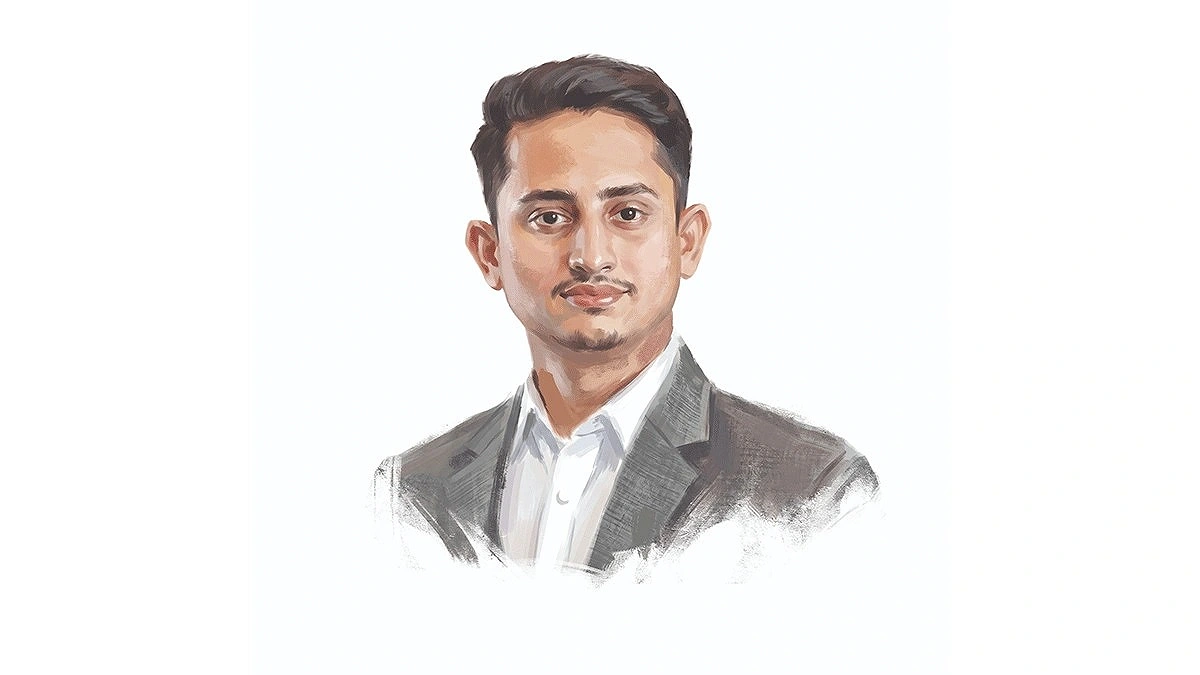
Graphics: Agamir Somoy
NCP leader Sarjis Alam spoke openly about the party’s position in politics, the interim government’s advantages, the distance with BNP, alliance possibilities with Jamaat, election experiences, and post-uprising politics. The interview was conducted by staff reporter Amzad Hossain Hridoy.
Agamir Somoy: Do you think the aspirations of August 5 and the spirit of the July mass uprising have been fulfilled?
Sarjis Alam: The aspirations of the July mass uprising were completely sincere and pure. It was a collective expression of people’s personal dreams and frustrations. However, much of the Bangladesh we envisioned after August 5 has not materialized in reality. Many members of the interim government failed to perform according to expectations due to a lack of experience. At the same time, various political parties tried to place their loyalists in different positions, where party allegiance was often prioritized over merit. As the largest political party, BNP’s influence was comparatively stronger. Overall, no one can completely avoid responsibility for these failures.
Agamir Somoy: So, are you disappointed?
Sarjis Alam: The long-standing culture of power-centric politics still exists within the state machinery. Because of this, I am somewhat disappointed. We wanted rapid change, but now it feels like such transformation will not happen within one or two years. It may take eight to ten years. However, one major change has taken place in people’s mindset. The younger generation is now far more politically conscious. Previously, politics in Bangladesh revolved around two parties. Now, at least three major political forces have emerged. In the future, no party will be able to become authoritarian so easily.
Agamir Somoy: After both the 1990 and 2024 mass uprisings, there was an opportunity to rebuild the country. Do you think the tendency to pursue power and privileges became more prominent than state reform?
Sarjis Alam: Bangladesh witnessed a mass uprising in 1990, and 34 years later, another major uprising occurred in 2024. I believe the 2024 mass uprising is the most significant political event since independence. History shows that when people endure prolonged injustice and oppression to the point where their backs are against the wall, they eventually rise up.
However, I do not think the 2024 movement has failed. Its impact will be long-term.
After 2024, we had an opportunity for change, but all of us, in one way or another, failed to fulfill our responsibilities according to expectations. Many became more involved in the realities of power and personal benefits rather than learning from the spirit of change. At the same time, it is also true that Bangladesh’s political culture is undergoing transformation. In the future, major changes may not come through bloody uprisings, but rather through democratic and political processes.
But if authoritarian or fascist politics from the past re-emerge, people will certainly resist again. Whether that resistance will be called a mass uprising or something else—that will be determined by time itself.
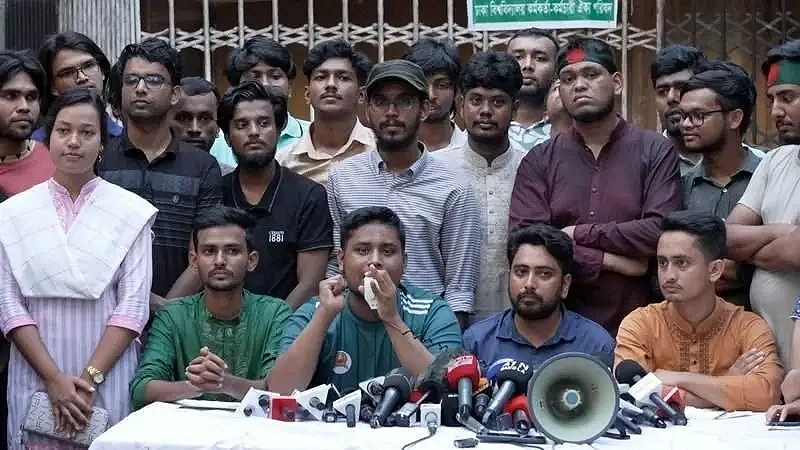
Sarjis during the July Movement. Photo: Collected
Agamir Somoy: At that time, there was a demand for forming a “revolutionary government.” Do you now think it was a mistake not to do so?
Sarjis Alam: I would not use the term “revolutionary government,” because forming such a government requires a well-organized revolutionary force, which we did not have. Attempting it would likely have created chaos. We simply did not have the manpower or institutional capacity to run an entire state. The country could not have been put at risk merely for the sake of taking power.
However, I do believe the advisory council should have included more competent individuals who genuinely embodied the aspirations of the movement. Some advisers were effective in their ministries, while others were ineffective from the outset. There should have been an evaluation mechanism for them.
Agamir Somoy: If you had the chance to return to the situation after August 5, would you do things differently?
Sarjis Alam: The most important decisions should have been made between August 5 and August 10, and we failed to do that. The president associated with the Awami League should have been arrested immediately. An initiative to rewrite the constitution should have been taken. A specific timeframe for the interim government should also have been announced.
We also made mistakes regarding reforms. After the mass uprising, the government had a full mandate to implement reforms. But later, time was wasted on debates over referendums and political consensus.
Another major issue was bringing to justice those who helped sustain authoritarian rule from bureaucrats to law enforcement agencies. The same events keep recurring in Bangladesh due to impunity. If justice had been ensured quickly, people would have been far less encouraged to commit such acts in the future.
Agamir Somoy: What was NCP’s actual relationship with the interim government? Many people referred to NCP as a “king’s party.”
Sarjis Alam: The reality is that NCP was probably the political party that benefited the least from the government. If we truly were a “king’s party,” then Nahid Islam would not have had to resign from his advisory position after five months to take responsibility for the party.
People assumed we were running the government, but in reality, we were managing crises from the outside. We helped the government deal with protests, road blockades, and instability.
Agamir Somoy: Was it justified to have your representatives in the interim government?
Sarjis Alam: At least some reforms and political discussions survived because our fellow activists were inside the government. In reality, NCP had only two advisers. Holding NCP responsible for the actions of an entire 25-member advisory council through one or two individuals is not realistic.
Agamir Somoy: Many people raise questions about the “mastermind” controversy, particularly regarding comments by Dr. Yunus about Mahfuz Alam. How do you see the matter?
Sarjis Alam: First of all, Dr. Yunus later clarified that he did not mean the term “mastermind” in the way people interpreted it. Mahfuz Alam himself has repeatedly said that the label was not accurate in the way it was presented.
We also do not believe that any one individual was the sole mastermind behind the movement. Mahfuz Alam was an important adviser, but there were many others like him. He himself has never claimed to be the sole mastermind.
Agamir Somoy: Why do you think Mahfuz Alam ultimately did not join NCP?
Sarjis Alam: NCP operates from a specific political and ideological position. Perhaps Mahfuz Alam could not fully align himself with that position, that’s why he chose a different platform.
I think if our alliance had been with BNP instead of Jamaat, Mahfuz Alam might also have joined NCP.
Agamir Somoy: How do you evaluate the various movements and so-called “mob politics” in the post-uprising period?
Sarjis Alam: During the interim government period after the uprising, there were nearly 400 movements. Everyone felt they had not received what they deserved, so they took to the streets. In some cases, there was disorder. This is true.
But it is also true that the situation could have been much worse. Political killings and violence could have increased significantly. Comparatively speaking, the situation remained under control. Therefore, I do not think it is fair to label every movement simply as mob politics.
Agamir Somoy: What is NCP’s position on cases filed against journalists and allegations that many people were implicated in murder cases unfairly?
Sarjis Alam: I have repeatedly said that not only journalists, but in 10 to 30 percent of murder cases across the country, names have been included of people who had no direct involvement.
In many cases, this has happened for commercial gain, political retaliation, or to create influence. There are also allegations of involvement by some BNP leaders and activists at the local level.
We are clearly saying that people with no involvement must be removed from these cases. At the same time, those who are actually involved must not be allowed to escape through money or political influence.
Agamir Somoy: There is ongoing discussion about the return of the Awami League. What future do you see for the party?
Sarjis Alam: The current government has the most important role to play here. Turning the ordinance banning the Awami League’s political activities into law was a strong step.
However, if opportunities are created for rehabilitation, bail, or release of Awami League leaders and activists accused of crimes, then the party may find a path back.
If justice is ensured and innocent supporters join different political parties, then the Awami League may never return to its previous position. Under the leadership of Sheikh Hasina or the Sheikh family, there is no opportunity for the Awami League to continue in politics. They are identified as those responsible for mass killings and murder.
Under different leadership, the party may become another Jatiya Party. However, if BNP comes to power and repeats the same mistakes that led to the Awami League’s downfall, public frustration could create an opportunity for the Awami League to return.
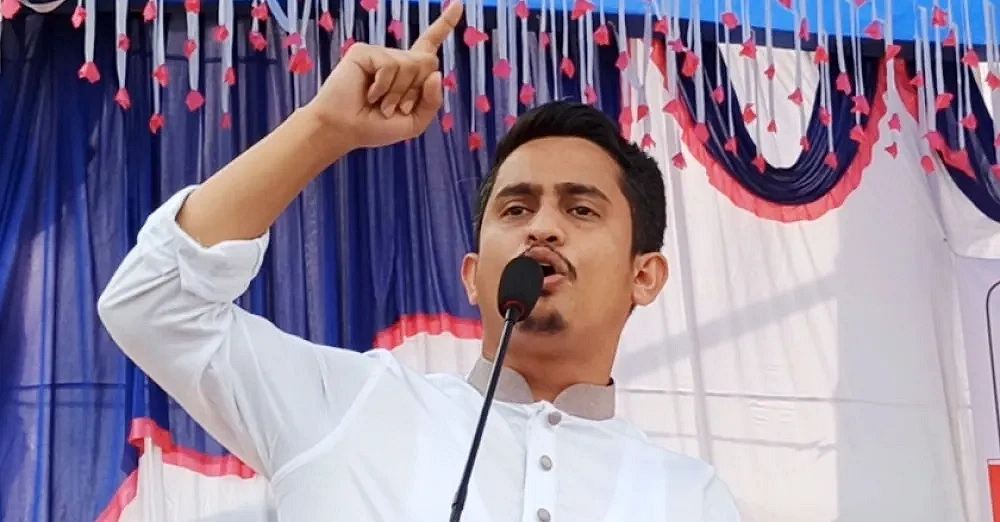
Sarjis delivering a speech at a rally. Photo: Collected
Agamir Somoy: Some people say that if an election had been held within six months of the uprising, your popularity would have been even higher and you might have won more seats. Do you agree?
Sarjis Alam: Around August 5, public emotions and expectations were at their peak. But at that time, we did not even have a political party.
In Bangladesh, it is not possible to win elections based solely on personal popularity. People still vote based on parties and symbols.
At that point, we had no plan to form a political party. Rather, we thought that if the interim government could fulfill its responsibilities properly, there might be no need to create a separate political party.
But when we realized that we could not align with the ideological positions or political culture of any existing political party, we decided to form a new party.
Agamir Somoy: So, has the wave of public support gradually declined over time?
Sarjis Alam: Public support was at its peak around August 5. Naturally, it was always going to stabilize afterward. The important thing is that it should not fall below a certain threshold.
However, the interim government failed to meet public expectations. Since people also associate us with that government, some of the disappointment has affected us as well.
Agamir Somoy: NCP is still largely seen as a party of the youth. There seems to be limited involvement of senior or veteran politicians. Do you see that as a weakness?
Sarjis Alam: Most members of our central committee are young. The largest age group is between 30 and 45 years old. We believe leadership within this age range can play the most effective role in transforming the state.
That said, we have not excluded senior citizens entirely. We have already involved them at the local level. For district or sub-district presidents, the minimum age requirement is over 40, and for general secretaries it is over 35. Currently, the average age of many of our district presidents is close to 50.
Over time, this representation will grow further. We hope that within the next one to two years, a comprehensive political structure involving people of all age groups will emerge.
Agamir Somoy: Many believed NCP would collapse because of internal conflicts, but the party still exists. Do you consider that a success?
Sarjis Alam: As long as NCP’s leadership remains united, there is no opportunity for the party to break apart. Our strength lies in the fact that we fought together on the streets during an uprising. This bond was built through labor, sweat, blood, and sacrifice.
We believe that in the future, NCP will become one of Bangladesh’s major political parties.
Agamir Somoy: Why should people vote for you? Where will NCP’s voter base come from?
Sarjis Alam: We do not practice anti-India politics; we practice anti-hegemony politics. If India wants to maintain a respectful and equal relationship, we have no problem with that.
We practice pro-Bangladesh politics. Many say “Bangladesh first,” but in reality, their party comes first. We want to move beyond that.
We believe in coexistence among all religions. We do not want Bangladesh to become a state of any particular religion. Our goal is to ensure justice, dignity, and fundamental rights for citizens.
We believe that, in the current reality, we can perform better in these areas than any other political party. That is why people should vote for us.
Agamir Somoy: You say NCP will be a centrist party. But if you form an alliance with Jamaat, will it be possible to maintain that centrist identity?
Sarjis Alam: An electoral alliance can be formed with any ideological political party. If forming an alliance with Jamaat automatically makes us right-wing, then BNP should be considered 30 times more right-wing than us. But that is not the reality.
Our politics are democratic, centrist, anti-hegemony, and pro-Bangladesh. Future alliances will depend on who works together for public rights and expectations. This will not change NCP’s ideological position.
Agamir Somoy: There are allegations that you are Jamaat’s “B-team” or “C-team.”
Sarjis Alam: This narrative was first spread by a section of the Awami League that fled abroad. Later, other political parties also began repeating it in talk shows and political discussions.
When they cannot confront us with arguments, they deliberately spread such claims. Our ideological position, political style, and methods are different from Jamaat’s. The differences are very clear.
Agamir Somoy: What might your future relationship with Jamaat look like?
Sarjis Alam: At present, we are working together on certain issues as opposition parties. However, everyone is preparing separately for future elections, including local government elections.
In the future, there may be an alliance, or we may contest independently. We have no permanent commitment with Jamaat. If there is alignment in political demands and programs, we will work together; if not, we will go separate ways.
Agamir Somoy: Did Shibir’s strong performance in student union elections become a factor behind your alliance with Jamaat?
Sarjis Alam: It was certainly one influencing factor. But a bigger reason was that even before the election, we realized BNP would not implement key state reforms.
Their political culture and structure are linked to the old political system. On the other hand, although Jamaat carries historical liabilities, allegations of extortion, land grabbing, or political violence against them were comparatively fewer at the grassroots level.
They also agreed with us on reforms and implementing the July Charter. That is where the decision to ally with Jamaat came from.
Agamir Somoy: There were discussions with BNP, but eventually an alliance was formed with Jamaat. Do you now think that was the right decision?
Sarjis Alam: So far, we believe it was the right decision because we now have representation in parliament. Perhaps only six MPs, but the political impact is much larger.
Without the alliance, we might have won one or two seats or none at all. Parliamentary representation is very important for a new political party. It gives leaders and activists confidence, hope, and courage.
We also held discussions with BNP. But on issues such as reforms and respectful seat-sharing, we did not receive the response we expected. As a result, the question of an alliance did not progress.
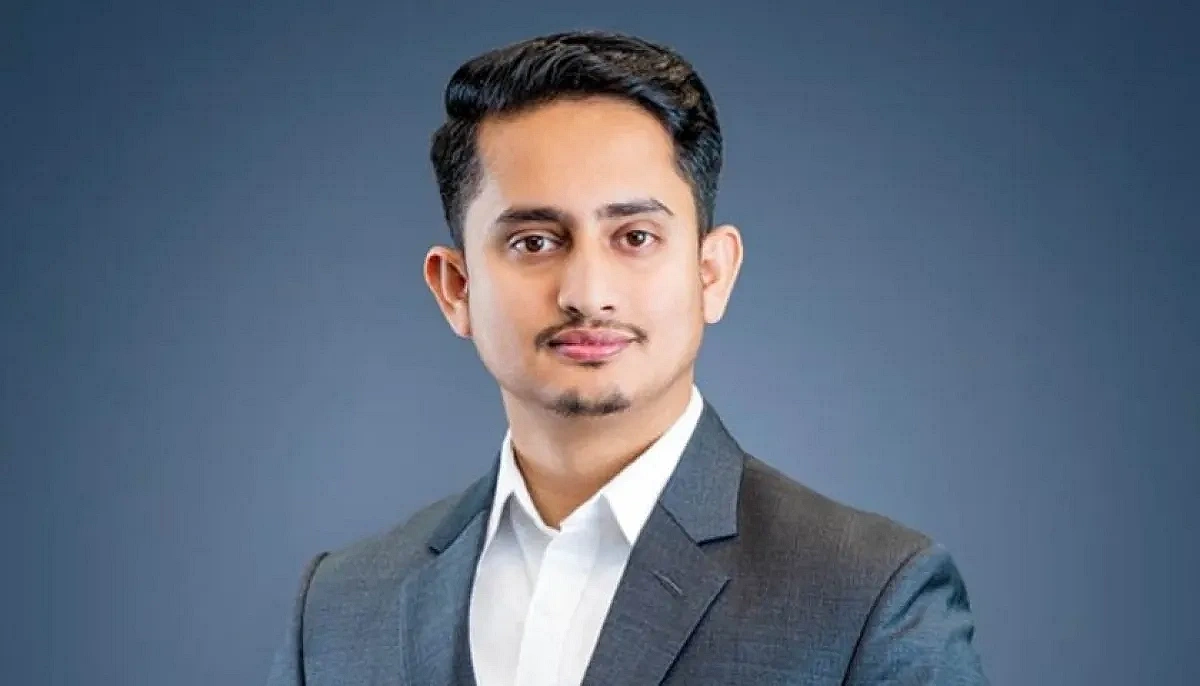
Sarjis Alam. Photo: Collected
Agamir Somoy: This was your first time participating in an election. How would you evaluate the experience overall?
Sarjis Alam: Based on the situation on the ground up until two days before the election, I believe I would have won by at least 20,000 votes. But at the last moment, Awami League votes consolidated in one direction, and a large portion of votes from the Hindu community also went to my opponent. There was also intimidation and the influence of money during the final two days.
Even then, I received nearly 168,000 votes. I believe I also secured 30–40 percent of BNP’s votes. Even now, people in Panchagarh say to me, “You are our real MP.”
Agamir Somoy: Do you think your opponent’s family legacy played a role in your defeat? What are your future election plans?
Sarjis Alam: No, I do not think that was the main reason. Family legacy may have given them a slight advantage, but I do not see it as a major factor.
Over the next five years, I want to get even closer to the people. I want to go door to door. I believe that by then, people will evaluate capable individuals beyond party affiliation or electoral symbols.
Agamir Somoy: On a personal level, what is your source of strength in this difficult political journey?
Sarjis Alam: I believe that if I stand for justice and fight to establish fairness, then the Creator will support me, and people will stand by me as well.
There will be propaganda, there will be obstacles, but we want to overcome those challenges and build the Bangladesh we aspire to.
Agamir Somoy: What changes have come in your life before and after marriage?
Sarjis Alam: Earlier, I was less focused on family matters. Now, responsibilities have increased, and my attachment to family has grown as well.
However, politics still remains the priority. At the end of the day, though, I feel a different kind of pull toward home.
Agamir Somoy: Many allegations have been raised against leaders of the uprising. So far, no corruption allegations have surfaced against you. How do you keep yourself grounded?
Sarjis Alam: Bangladesh’s power structure is such that there are many opportunities for corruption once someone comes to power.
But I believe the Creator gives only a very small number of people the opportunity to help build a nation through leading an uprising. I want to do justice to that opportunity.
I want to live honestly, earning only as much as I need. The love and respect of people mean far more to me. That is what I prioritize.
Agamir Somoy: Thank you for your time.
Sarjis Alam: Thank you as well. Best wishes to Agamir Somoy.
