
Bangladesh to get duty free access to Japan for 7,379 products
- Prime minister accuses opponents of creating situation against government in the name of ‘reforms’
- Six agreements with Japan and two loan projects secured

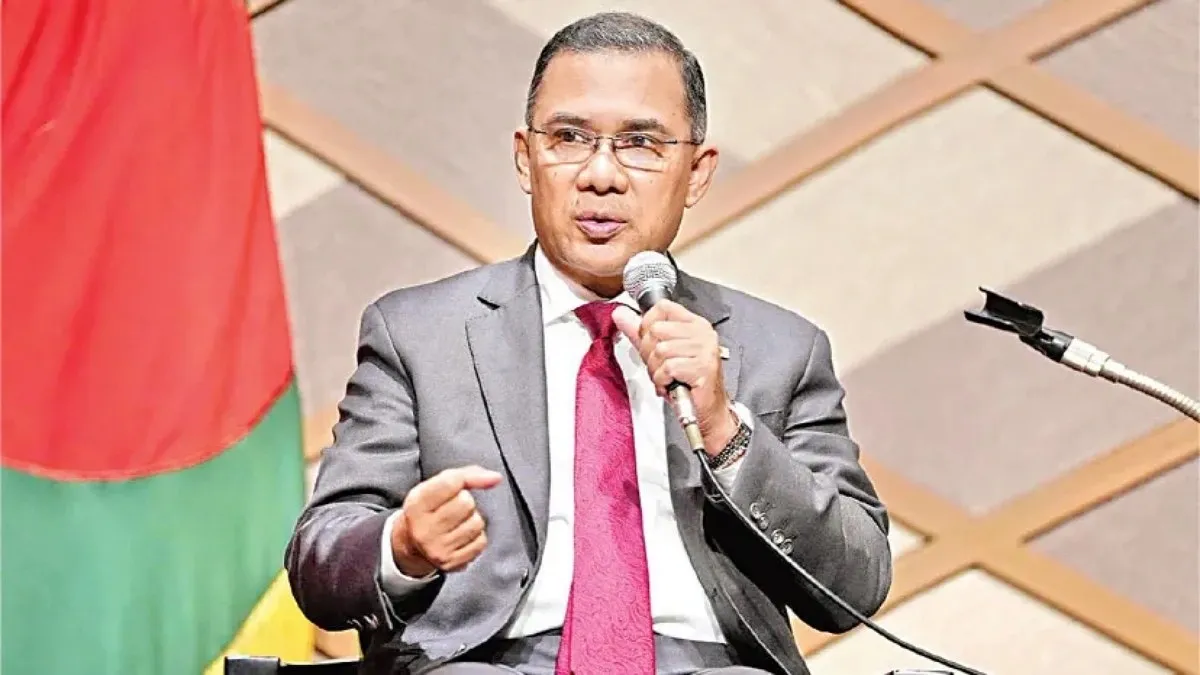
Photo: Prime Minister Tarique Rahman
Bangladesh will receive duty free access to Japan for 7,379 products under an economic cooperation framework. In return, various Japanese products, including steel, motor vehicle parts and electronic components, will receive preferential market access in Bangladesh. Prime Minister Tarique Rahman shared the information on the third day of his visit to Japan. He emphasized the importance of taking the longstanding friendship between the two countries to a new level through trade, investment, industrialization and technological cooperation.
At the same time, the prime minister accused certain groups of trying to create a situation against the government by repeatedly talking about reforms. He said efforts were underway to prevent the Bangladesh Nationalist Party (BNP) from carrying out reforms that would benefit marginalized people. However, improving the living standards of ordinary people is a priority for his government. Alongside improvements in education, health care and the environment, he wants to make Dhaka a clean city like Tokyo.
The prime minister made these remarks on Wednesday at the Bangladesh Japan Economic Forum in Tokyo and during an exchange of views with expatriate Bangladeshis at Hotel New Otani. Tarique Rahman called on Japanese companies to invest in energy, technology, electronics manufacturing and modern transport infrastructure to help transform Bangladesh into a global manufacturing hub.
‘I want reforms that benefit marginalized people’
Addressing expatriate Bangladeshis, Tarique Rahman said, “Efforts are being made to create a situation that prevents the BNP from carrying out reforms that would benefit even the most marginalized people.”
He said the benefits of initiatives to improve education, health care and the environment must reach people from all walks of life. His priority is reform that improves the living standards of everyone, from rickshaw pullers to doctors, lawyers, salaried employees, businesspeople and teachers.
The prime minister said, “As a politician, I understand reforms to mean those reforms whose benefits reach my marginalized people.”
Noting that attempts were being made to obstruct the government’s work, he sought everyone’s cooperation in implementing these initiatives.
At the event, the prime minister criticized the mockery and ridicule directed at Md. Tarique Rahman, member secretary of the Amjanatar Dal, who was part of the delegation, on social media. He said, “Here we have Am Tarique. He is facing various forms of criticism on social media. People are saying that bringing him along has wasted government money. Yet they have nothing to say about the country’s various problems.”
Plan to make Dhaka as clean as Tokyo
Outlining plans to make Dhaka and the rest of the country cleaner, the prime minister said one of his fellow travelers had told him that they had not seen any litter on Tokyo’s streets. In contrast, garbage is scattered across various roads in Dhaka. He said air pollution in the capital must be reduced, trees must be planted in different locations and waste management must be improved.
Those present at the meeting with expatriates included the prime minister’s wife, Dr. Zubaida Rahman; Finance Minister Amir Khosru Mahmud Chowdhury; Adviser on Finance and Planning Rashed Al Mahmud Titumir; Civil Aviation and Tourism Minister Rashiduzzaman Millat; State Minister for Energy Anindya Islam Amit; and Bangladesh Investment Development Authority Chairman Ashik Chowdhury, along with other members of the delegation.
Among the Japan BNP leaders present were Mir Rezaul Karim, Imdadul Islam Moni, Alamgir Hossain Mithu, S Islam Nannu, Saifullah Zahed Asik, Mir Kazu, Molla Delwar and Titu Byapari. Businesspeople Selim Pathan and Asma Pathan were also present.
Aim to build a global manufacturing hub through Japanese investment
At the Bangladesh Japan Economic Forum, the prime minister said Bangladesh’s market of more than 180 million people, young workforce, expanding middle class and economic growth prospects had made the country an attractive destination for Japanese investors. He sought Japan’s cooperation in ensuring a reliable and affordable energy supply.
He also outlined plans to establish a Bangladesh Japan technology park. He expressed expectations that Japanese companies, universities and investors would participate in artificial intelligence, cloud computing, robotics and electronics manufacturing. He also expressed interest in expanding cooperation between the two countries in space science, satellites and space engineering.
Investment opportunities in Araihazar economic zone
Highlighting the potential for Japanese investment in Bangladesh, Tarique Rahman said automobile manufacturers, major retailers, agricultural machinery producers and various other companies were taking initiatives to establish factories in the Japanese Economic Zone in Araihazar. He assured them of the necessary support.
The prime minister said Japanese companies establishing factories in Bangladesh would gain access to the country’s large domestic market. They would also have opportunities to use Bangladesh as a manufacturing hub to export products to various countries around the world.
Hundreds of thousands of young people to learn Japanese
Tarique Rahman said initiatives were being taken to teach Japanese to Bangladeshi students. He said the government envisioned a future in which hundreds of thousands of young Bangladeshis would learn Japanese. He expressed hope that this would expand opportunities for higher education and employment in Japan while further strengthening trade and investment ties between the two countries.
At the end of his address, the prime minister urged Japanese businesspeople to establish factories in Bangladesh, create new jobs and participate in the country’s industrialization.
Discussions on opening a JBIC office
On Wednesday morning, the prime minister met with Kazuhiko Amakawa, governor of the Japan Bank for International Cooperation (JBIC). They discussed ways to expand investment and economic cooperation in energy, information and communication technology, and infrastructure.
When Bangladesh requested that JBIC open an office in the country, the governor assured the delegation that the proposal would be considered seriously.
Call for Uniqlo to increase investment
A delegation led by Tadashi Yanai, chairman and chief executive officer of Fast Retailing, the parent company of Japanese clothing manufacturer and retailer Uniqlo, met with the prime minister.
Tarique Rahman called on the company to increase investment in Bangladesh’s ready-made garment industry, particularly in the production of synthetic fibers, technical textiles and sustainable clothing.
Talks with JETRO on trade and skills development
During a meeting with Tsusumu Kataoka, president of the Japan External Trade Organization (JETRO), the prime minister discussed increasing Japanese investment in Bangladesh, diversifying export products and developing skills.
He expressed expectations for investment in advanced manufacturing, information technology, automobile manufacturing, renewable energy and agricultural product processing in special economic zones. He also called for cooperation in establishing Japanese language training centers.
Following the meeting, the prime minister attended a luncheon hosted by the JETRO president.
Six agreements with Japan and two loan projects secured
Bangladesh has signed six agreements and memorandums of understanding with Japan. Japan has also pledged financing for two loan projects to support Bangladesh’s development. In addition, 17 memorandums of understanding have been signed between private sector entities in the two countries.
Foreign Affairs State Minister Humayun Kabir disclosed the information at a press conference held at the Bangladesh Embassy in Tokyo on the third day of Prime Minister Tarique Rahman’s four-day official visit to Japan. Additional Press Secretary to the Prime Minister Atikur Rahman Rumon was also present.
The state minister said the six documents signed between the two countries included four cooperation memorandums, one grant agreement and one letter of intent on climate change.
Under the agreements, Japan will provide a grant of up to 21.2 billion yen to supply a patrol vessel to strengthen Bangladesh’s coastal security. Japan will also provide a loan of 158.8 billion yen to improve the investment climate and 30.68 billion yen for the second phase of the Upazila Governance and Development Project.
Areas covered by the agreements
A memorandum of cooperation was signed between Japan’s Ministry of Economy, Trade and Industry and the Economic Relations Division of Bangladesh’s Ministry of Finance.
Another memorandum was signed between Japan’s Ministry of Agriculture, Forestry and Fisheries and Bangladesh’s Ministry of Agriculture to expand cooperation in the agricultural sector.
The two countries also reached an understanding on the Skills for Employment Investment Program to improve skills and expand employment opportunities.
A separate memorandum of cooperation was signed between Japan’s Ministry of Agriculture, Forestry and Fisheries and Bangladesh’s Ministry of Fisheries and Livestock to strengthen cooperation in fisheries and livestock.
A letter of intent was also signed between Japan’s Ministry of the Environment and Bangladesh’s Ministry of Environment, Forest and Climate Change to expand cooperation in addressing climate change.
Alongside these government level agreements, 17 memorandums of understanding were signed between private sector organizations from the two countries under the initiative of the Japan External Trade Organization (JETRO).
