
Gas supply boost raises industrial production to 70 percent
- Load shedding drops from 5 hours to 1.5 hours
- Crisis persists in Savar and Ashulia
- Gas supply improves outside Dhaka

Collected Photo
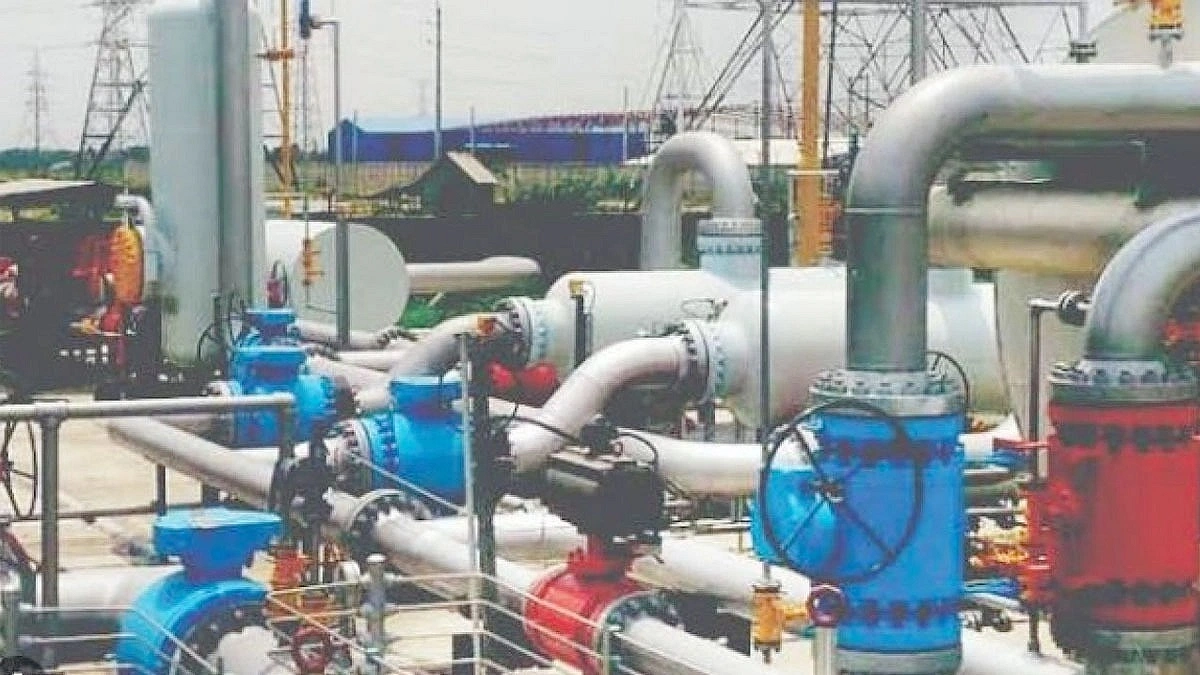
Industrial production is returning to normal as gas supply has visibly improved in various industrial zones across the country. Gas pressure at factories has increased from 2 PSI (pounds per square inch) to as high as 7 PSI. At the same time, power load shedding has decreased. Industrial entrepreneurs said areas that previously experienced power outages for 7 to 8 hours are now facing only one to one and a half hours of load shedding.
They said gas supply has improved significantly in the industrial zones of Chattogram, Dhaka, Mymensingh, Gazipur, Narayanganj and Narsingdi. However, as of Wednesday evening, there had been little improvement in the supply situation in Savar, Ashulia and Manikganj. The situation in these areas may also return to normal soon. Production capacity had fallen below 50 percent due to the fuel crisis. It is now rising to 65 to 70 percent.
Bangladesh Garment Manufacturers and Exporters Association President Mahmud Hasan Khan Babu told Agamir Somoy that gas pressure has increased in various parts of the country. In some areas, pressure has risen to 7 PSI while in others it is around 2 PSI. However, the situation has not fully improved in some areas. Savar, Ashulia and Manikganj are particularly affected. The government should focus on improving the gas situation in these areas.
Regarding power load shedding, he said areas that previously experienced power outages for 7 to 8 hours are now facing only one to one and a half hours of load shedding. As a result, factory production has largely returned to normal. However, the government needs to pay more attention to maintaining this improvement in the fuel situation.
According to government data, the country's daily gas demand is 3.8 billion cubic feet. Of this, 2.6 to 2.7 billion cubic feet is supplied to manage the situation. LNG supplies a maximum of 1.05 billion cubic feet. Up to Tuesday night, 2,602 million cubic feet of gas had been supplied. Gas supply was 2.649 billion cubic feet before the July 21 accident. On Monday and Tuesday, around 1,000 million cubic feet of gas was supplied from LNG.
Describing the situation in Gazipur's industrial zone, Sparrow Group Managing Director Shovon Islam said gas supply has improved at most factories. Where gas pressure was previously close to zero, it is now around 2 PSI. This is allowing garment factories to carry out finishing work properly. However, washing and dyeing operations generally require pressure of 4 to 6 PSI.
“Power load shedding has also decreased significantly. Where load shedding was previously around 80 percent, it has now fallen to around 15 percent. Yesterday, it was only one and a half hours. This has increased the pace of overall factory production. Production has increased to 65 to 70 percent at many factories,” he said.
Bangladesh Ceramic Manufacturers and Exporters Association President Moinul Islam said ceramic factories generally require gas pressure of 15 PSI for 100 percent production. However, as the use of advanced technology has increased at factories, production can now be maintained in many cases with a minimum pressure of 5 PSI. Gas pressure increased at many factories yesterday. However, the major question now is how long this improvement will last.
BTMA Director Mizanur Rahman said owners of member factories in various parts of the country have reported improvements in gas supply. As a result, production activities are returning to normal. However, it is important to maintain this supply situation.
Sources at Petrobangla and the Rupantarita Prakritik Gas Company Limited (RPGCL) said plans have been made to bring in 10 LNG cargoes this month. The process of purchasing another 11 cargoes for October is underway.
