Myanmar obliged to take Rohingyas back, ICJ rules

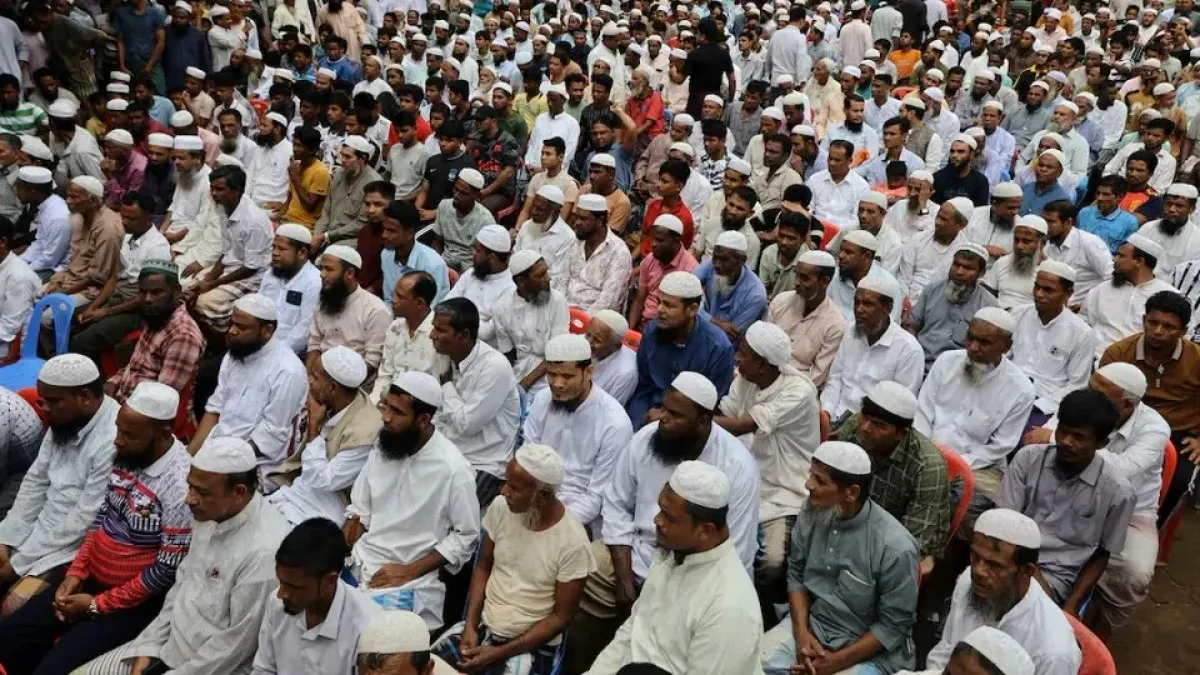
Rohingyas in the refugee camps in Cox’s Bazar watched as the International Court of Justice delivered its ruling. Photo: Reuters.
The solution to the Rohingya crisis lies in their repatriation to Myanmar—a point Bangladesh, under pressure over the refugees, had long been making, and which found resonance in the ruling of the International Court of Justice (ICJ) as well.
In a historic verdict delivered on Thursday, the UN court found Myanmar guilty of genocide against this Muslim population and stated that it is the responsibility of the Myanmar government to ensure the safe and dignified resettlement of the displaced Rohingyas.
The Netherlands-based International Court of Justice delivered today's verdict in a case filed by Gambia, an African country, under the sponsorship of the Organisation of Islamic Cooperation (OIC), the bloc of Muslim countries. This is the first ruling by the international court holding a state responsible for genocide.
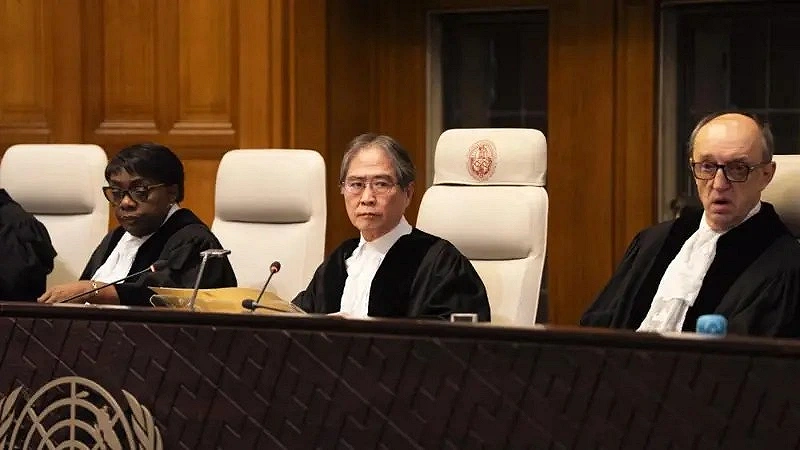
Members of the International Court of Justice, who found Myanmar guilty of the Rohingya genocide. Photo: Reuters
Through the verdict in this case, which has been running for seven years, the persecuted Rohingya population of Myanmar has received justice. Even though Myanmar refuses to acknowledge them, the ruling recognized them as a distinct people of Myanmar.
The ICJ verdict also called for compensation for the human rights violations suffered by the persecuted Rohingyas. The amount of that compensation will be determined at a later time.
The Rohingyas' homeland is Rakhine State (formerly Arakan) in Myanmar. This Muslim population has long been persecuted in the Buddhist-majority country. The history of Rohingyas taking shelter in neighbouring Bangladesh in the face of persecution is also not a short one.
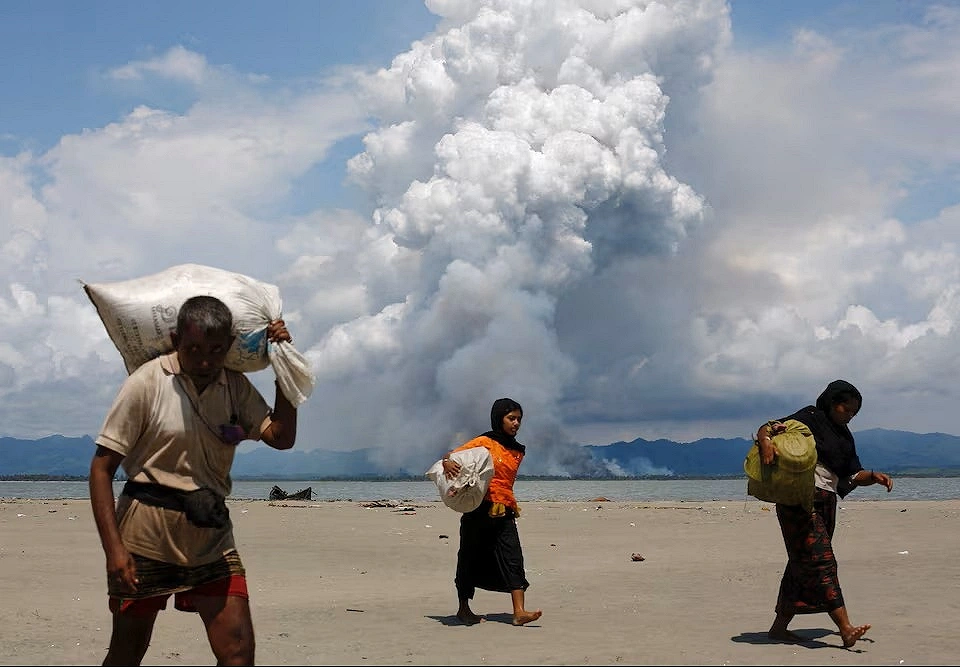
Around 500,000 Rohingyas who came to Bangladesh at various times had been living in various refugee camps in Teknaf, Cox's Bazar, Bangladesh. However, in August 2017, a tide of Rohingyas surged at the border. At one stroke, the number of refugees increased by more than 700,000.
After a group of Rohingya insurgents attacked an army post, Myanmar's junta government forces launched a sweeping operation in Rakhine that month.
Allegations of indiscriminate killing, rape, and looting in that military operation arose at the time. Later, a UN investigation revealed that it was an ethnic repression campaign. Its objective was to erase the Rohingyas from Myanmar's map.
With the 700,000 added to the previous 500,000, the number of Rohingyas in Bangladesh's refugee camps stood at 1.2 million. Since then, with the birth of new children and more Rohingyas arriving, the number of refugees now exceeds 1.3 million.In the verdict, the court's chief justice, Yuji Iwasawa, said that the Rohingyas are now displaced due to Myanmar's wrongful acts. Myanmar has the obligation to ensure their safe and dignified return to their place of origin and the reunification of family members.Alongside 1.3 million in Bangladesh, around 500,000 Rohingyas remain in Myanmar's Rakhine State. The Rohingyas in Rakhine still live in fear, and those in Bangladesh do not feel confident about returning to Rakhine.In 2017, the Myanmar government signed an agreement with Bangladesh for the repatriation of the Rohingyas. Myanmar also took a list of the refugees for verification. But until now, not a single Rohingya has been taken back. Meanwhile, with the outbreak of civil war, the situation in Myanmar has become even more fragile.The Bangladesh government has repeatedly called on the international community to pressure Myanmar to begin repatriation. The matter has also been raised at the United Nations many times.UN and human rights organizations believe that conditions are still not in place for the Rohingyas to live safely after returning to Myanmar.Bangladesh wants Myanmar to be pressured to create that environment. The reason given is that Bangladesh is now exhausted from carrying the burden of a huge number of refugees for a long time.The UN court said in its ruling that the widespread killings and sexual violence carried out by Myanmar's security forces against the minority Rohingya Muslim population in 2017 amounted to state-sponsored genocide.While reading out the verdict, the court's chief justice, Yuji Iwasawa, said, "The court has found that Myanmar's security forces killed thousands of Rohingya civilians, committed widespread sexual violence, used extreme violence against children, and attacked fleeing Rohingyas. Myanmar, as a state, committed genocide against the Rohingya population in Rakhine State."It is rare for genocide allegations to be proven at the International Court of Justice. The main reason is that the accusing party must prove that there was a specific intent to destroy, in whole or in part, a national, ethnic, racial, or religious group. As a result, this verdict is being seen as a major victory for Gambia.The panel of 15 judges said in the ruling that the only reasonable explanation for Myanmar's actions is that the country wanted to erase the Rohingya population. The legal standards required to prove genocide have been met in this case.This ICJ ruling is final. There is no opportunity to appeal against it. It is believed that the impact of this verdict will be felt beyond Myanmar as well.Source: Reuters and Al Jazeera