

Govt at the peak of popularity in a short time, claims Mahdi Amin

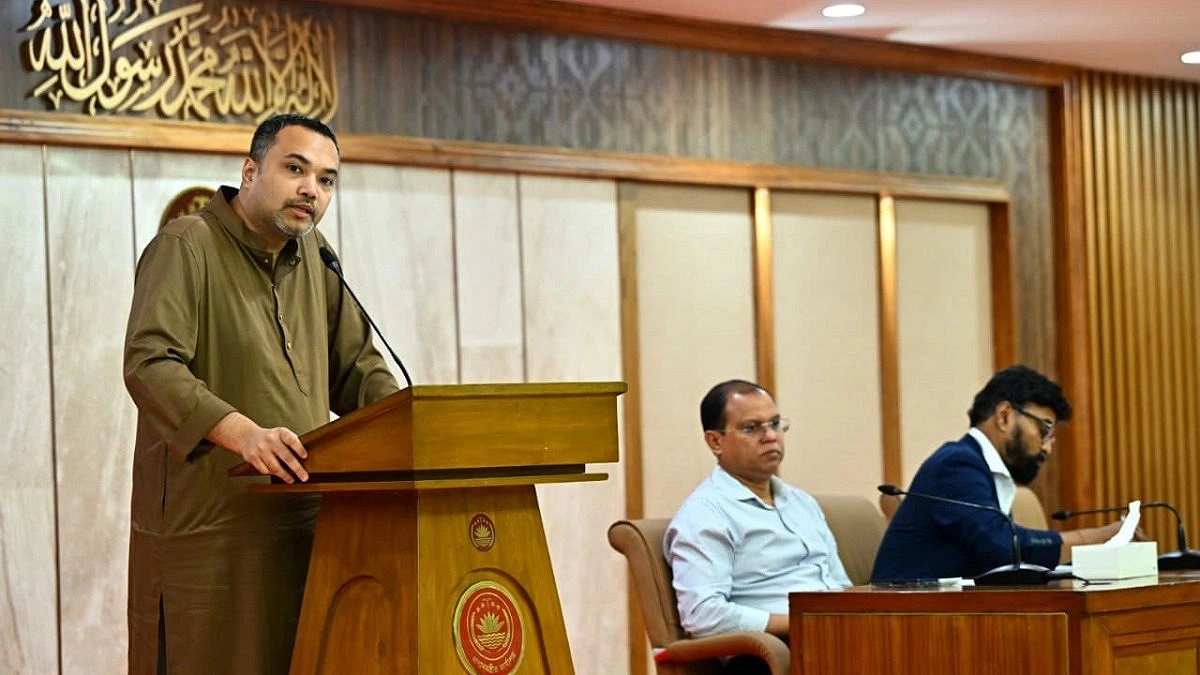
Spokesperson for the Prime Minister's Office, Mahdi Amin. Photo: Collected.
The successes of every ministry are tangible in the first 5 months of the incumbent BNP government's tenure. The government is working to implement the BNP's election manifesto even before the voting ink dries. Spokesperson for the Prime Minister's Office, Mahdi Amin, has claimed that this government has reached the peak of popularity in a remarkably short time after taking office.
He made these remarks at a press conference held at the Prime Minister's Office in Tejgaon on Saturday, marking the completion of the government's five months in power. Outlining the successes of the government over these five months, the Prime Minister's advisor said, "We can broadly divide these successes into 5 major achievements."
1. People's Trust, Love, and Support
After a long time, a government formed through a free, fair, and acceptable election is moving forward, carrying the trust of people from all walks of life. In this system, every commitment to establishing state accountability, administrative transparency, freedom of speech, human rights protection, and good governance under the law is being upheld with great firmness. Due to the voter-less one-sided election of 2014, the pre-dawn voting of 2018, and the unilateral dummy election of 2024, the representation of the people in state power was absent for a long period.
Finally, on February 12, 2026, a democratic government assumed state responsibility under the leadership of the Prime Minister through a free, spontaneous, and impartial election held with the participation of the general public. As a result, after a long wait, the people have regained their rights. The deep mutual trust and reliance between the government and the people have today firmly established this state system as a truly welfare-oriented democratic government.
2. Justice and Law Enforcement
A precedent for ensuring the fastest possible justice was set by completing the verdict in the child Ramesa rape and murder case in 19 days and the Meherpur child rape case in 29 working days. In cases under the Women and Children Repression Prevention Act, 10 verdicts were pronounced in just one month after prioritizing hearings for death references and appeals.
Retired Major Mozaffar Hossain, the killer suspect of martyred President Ziaur Rahman, was arrested in Dhaka. He had been on the run for 45 years. He is currently in military custody. This marks an unprecedented success for the intelligence agencies.
Initiatives have been taken to arrest and repatriate the accused in the much-discussed Tanu murder case and the Sharif Osman Hadi murder case from neighboring countries. Necessary formalities are also underway to arrest former Inspector General of Police Benazir Ahmed in Dubai with Interpol's cooperation and bring him back to the country.
3. Legislative and Political Initiatives
In the context of the July-August student-mass uprising, the 'July Fighters Indemnity Act' was passed in the National Parliament.
The 'Anti-Terrorism (Amendment) Bill' was passed in parliament, incorporating provisions to ban the activities of any political party or organization under the anti-terrorism law. Institutional and political decisions are being taken regarding the politics of that fascist force, the Awami League.
The extradition process is underway with the Indian government to bring back convicted Awami League leader Sheikh Hasina.
4. Record Legislative Output
Within the first 25 working days of parliamentary activities, an unprecedented 94 bills related to public interest and state reforms were passed with remarkable speed—meaning the ordinances adopted by the interim government were transformed into laws.
5. Security, Environment, and Infrastructure
The joint forces conducted an operation in the Salimpur jungle vicinity of Sitakunda, Chattogram, and freed the area from terrorism without any casualties.
A massive social program to plant 25 crore (250 million) trees across the country over the next 5 years was inaugurated to protect the environment.
An official announcement was made to initially launch 250 state-of-the-art environmentally friendly electric buses to make Dhaka pollution-free.
AI technology is being used in most important areas to modernize and streamline Dhaka city's traffic management.
An automated cargo release system has been launched at Chattogram Port, and instructions have been given to relocate four inter-district bus terminals outside the metropolis to ease Dhaka's traffic congestion.
Due to well-planned economic management, inflation has decreased to 9.16 percent, and foreign exchange reserves currently stand at 36.58 billion USD.
Remittances are increasing, reaching the highest amount in Bangladesh's history. As a reflection of expatriates' deep trust, a record $3.75 billion in remittances was sent in March. As you know, the export of labor abroad began during the erstwhile President Ziaur Rahman. Building on that legacy, the government is prioritizing the 'Expatriate Card'.
To prevent state wastage, cabinet members have rejected the tradition of purchasing duty-free cars allocated for them and availing government plot benefits.
Protecting the interests of all classes and professions in light of the manifesto
Prime Minister Tarique Rahman made a groundbreaking promise in his election manifesto to change the fate of people from all classes and professions. With the people's mandate, implementation began even before the voting ink dried after taking office. He views this mandate not as power, but as a responsibility to run the country. He has long contemplated changing the destiny of the people, and that vision and blueprint were reflected in the manifesto. By prioritizing its implementation, this people-friendly government has proven that it is truly a government that seeks the welfare of common people and upholds their rights.
For women's empowerment, distribution of 'Family Cards' has begun; for farmers, 'Farmer Cards'; for athletes, 'Sports Cards'; and an 'Expatriate Card' is being launched. Although different cards are being provided initially, an initiative has been taken to provide an integrated 'Universal Card' in the future.
Within one week of forming the government, the decision to waive agricultural loans, including interest, up to 10,000 Taka for 12 lakh (1.2 million) small farmers was implemented.
Initiatives have been taken to provide loans on easy terms, prioritizing women and the youth.
To revitalize the IT sector and provide social recognition to freelancers, an initiative has been taken to issue state ID cards to 2 lakh (200,000) professional freelancers.
To ensure food security for low-income and general people, the distribution of rice at just 15 Taka per kg to 55 lakh (5.5 million) families has been ensured.
To ensure social dignity and financial security, a special monthly allowance has been introduced for Imams, Muazzins, and clergy of various religions.
An announcement has been made to provide free school dresses and eco-friendly jute-made school bags for underprivileged students.
The 'Notun Kuri Sports' competition has been launched to create opportunities for children's mental development, healthy recreation, and sports.
A humanitarian project worth Tk 420 crore (4.20 billion Taka) has been undertaken to provide permanent rehabilitation, education, and healthcare to lakhs of street children and to raise them as good citizens.
or the first time, the government has organized a national Tafsir (Quranic exegesis) competition. Applications have been invited from eligible candidates interested in participating.
A historic announcement has been made to gradually increase the honorarium and salary of teachers—the architects of the nation—to improve their standard of living.
To expand female education and empower women, education up to the Honours (Bachelor's) level has been made completely free for female students.
Initiatives include establishing smart classrooms in educational institutions, providing free Wi-Fi facilities, and introducing nutritious mid-day meals.
A decision has been made to add four entirely new textbooks based on sports, culture, technical education, and joyful learning for students at the primary and secondary levels starting from the 2027 academic year.
To establish sports as a profession, as part of the initiative to build modern 'Sports Villages' in all 64 districts, aesthetic designs for 10 of them have been finalized.
An initiative has been taken to provide loans of up to 10 lakh Taka (1 million Taka) to students interested in pursuing higher education abroad, as support for bank guarantees or bank solvency.
A fund of Tk 500 crore (5 billion Taka) has been created to support start-ups for new and young entrepreneurs.
A 25% discount on metro rail fares for the elderly and people with disabilities; sports equipment provided to 550 institutions; 8 sports introduced for children aged 12–14; and a Sports Diplomacy Cell has been established.
Airfare has been reduced to facilitate Hajj for devout Muslims.
Initiatives have been taken to establish employment exchanges in every district, prioritizing youth and women across the country. Demand mapping has been implemented to create employment opportunities through every embassy worldwide, based on which the types of skills demanded in various countries are being determined and integrated into Bangladesh's technical and vocational education.
An announcement has been made to launch a specialized 'Pink Bus Service' to ensure safe and comfortable travel for women.
To address the long-standing manpower crisis in the health sector, data collection for vacant positions is ongoing, and a decision has been made to recruit 1 lakh (100,000) health workers, of which 80% will be women.
Free dengue testing facilities have been introduced at government hospitals.
An initiative has been taken to convert approximately 200 unused government buildings in cities into modern maternity wards, clinics, and healthcare centers in the shortest possible time.
To accelerate grassroots development, the 'National Rural Development Day' was observed for the first time in a highly dignified and festive atmosphere.
Plans have been made to establish 2,000 modern mini cold storage facilities across the country to prevent wastage of agricultural produce and ensure fair prices for farmers' products.
To ensure financial relief for the general public, the additional monthly charges imposed on prepaid electricity meters have been immediately withdrawn.
To strengthen rural healthcare, upazila hospitals are being upgraded to 101 beds. Every union and every ward in cities will have a health unit providing primary healthcare services. Upazila hospitals will have ICU facilities, along with emergency departments, indoor and outdoor services, and modern pathology facilities operating around the clock.
An initiative has been taken to form 'Primary Health Care Units' in every union and to launch house-to-house health screening activities.
The 'Padma Barrage Project' has been adopted for the socio-economic development of the people in the southern delta region of the country.
The Prime Minister inaugurated the 'Renewable Solar On-Grid Rooftop' project, which aims to add 5,000 megawatts over five years at a rate of 1,000 megawatts per year. Instructions have been given to install rooftop solar panels at Deputy Commissioner offices, government buildings, and educational institutions wherever possible.
Under the leadership of Prime Minister Tarique Rahman, the manifesto programs are already being implemented rapidly. The government, formed with the people's mandate, is moving forward with the commitment to build a discrimination-free, prosperous new Bangladesh.
Government's success in overcoming short-term challenges
Following the fall of the previous fascist regime, the current people-friendly government took over the responsibility of state administration during a great crisis involving the reconstruction of a shattered state structure, a fragile economy, and social chaos. Since assuming office, this government has been able to overcome various challenges and bring the country and nation to a stable position.
Despite the global intense fuel and oil crisis, proper management has kept domestic fuel prices at a minimum and ensured a normal supply.
Within the first month of taking office, through effective market monitoring, prices of essential commodities were controlled during Ramadan and Eid-ul-Fitr, separate train compartments were allocated for women, and as a labor-friendly government, arrangements were made for workers to receive their salaries, bonuses, and arrears on time.
During Eid-ul-Adha, the illegal entry of Indian cattle was completely halted, ensuring fair prices for local farmers, and 100% of animal waste was removed within a record 8 to 12 hours.
Despite various propaganda and conspiracies, religious events for followers of different faiths were organized peacefully.
A budget of 9.38 lakh crore Taka (938,000 crore Taka) was announced for the 2026–27 fiscal year; the 3R (Recovery, Restoration, Reconstruction) strategy was adopted for economic recovery, stability, and structural reforms.
A people-friendly budget was announced within just 3 months and 13 days, reducing taxes on most essential items and formulating an investment- and trade-friendly budget. The largest portion of the budget was allocated to education, health, and social security. For the first time, prices of essential goods did not increase after the budget announcement, and a pragmatic, life-oriented budget has made it possible to maintain price stability—unlike previously, when syndicates would artificially hike prices.
A special fund of 40,000 crore Taka (400 billion Taka) has been created for bank recapitalization to address capital shortfalls and revitalize the financial sector.
Initiatives have been taken to reopen closed factories.
To curb the deadly addiction of online gambling, sports betting, and crypto-based gambling in the digital age, a 159-year-old law was repealed and the 'Gambling Prevention Act-2026' was unanimously passed in parliament.
As part of the anti-corruption and anti-money laundering drives, assets worth 76,000 crore Taka (760 billion Taka), belonging to Sheikh Hasina, her family, and 10 industrial groups, have been seized both domestically and abroad. Agreements have been finalized with 10 countries to recover the laundered money.
Nearly 100% of children have been successfully vaccinated against measles.
Work has been completed in record time to inaugurate the state-of-the-art Third Terminal at Hazrat Shahjalal International Airport as soon as possible.
Due to the government's adept economic management, the country's reserves, according to BPM-6, have increased by 1.88 billion USD to reach 31.94 billion USD.
In the period from February to June 2026, merchandise exports amounted to $20.05 billion, with June's exports increasing by approximately 26% compared to the same period last year.
Implementation of a waste‑to‑energy plant in Aminbazar, which will process approximately 3,000 tons of Dhaka's waste daily to generate 42.5 megawatts of electricity, with a target to begin supplying power to the national grid starting August 2028.
Rebuilding a crumbling state system into a stable and development‑oriented one is undoubtedly a major challenge for any government. However, the government, with the people's mandate, has proven within just 5 months that with goodwill, accountability, and honesty, any difficult situation can be overcome. Despite various domestic and international adversities, the foundation for governance and economic reform, built in this short time while upholding the people's trust, will be a valuable asset on the path to building our desired Bangladesh, Insha'Allah.
Highest Priority on People's Freedom and National Sovereignty
Moving past the era of the previous regime's subservient foreign policy and internal repression, the current government, elected by the people's direct vote, has been working since assuming office to restore the country's political freedom, consolidate national sovereignty, and elevate economic‑strategic diplomacy to new heights. Embracing the 'Bangladesh First' policy, the government has prioritized mutual equality, fairness, self‑respect, and national interests, taking dynamic initiatives to enhance Bangladesh's global standing, attract foreign investment, resolve long‑standing bureaucratic complexities, strengthen border and airspace security, and reform trade and state administration. The government aims to ensure a balanced foreign policy where we can build bilateral and multidimensional relations with every country.
Human rights, freedom of speech, and the rule of law are being ensured. On this very day two years ago, July 18, the fascist government shut down the internet and carried out massacres against the people. Currently, Bangladesh is enjoying the highest level of freedom of speech in its history.
The Prime Minister traveled abroad for the first time. Due to being elected by the people's vote and embodying public aspirations, he received unprecedented honor and red‑carpet receptions in Malaysia and China. Bangladesh's prestige on the world stage has further increased.
Attending the annual meeting of the World Economic Forum, the Prime Minister received global acclaim, and his speech on climate and the environment was widely praised.
As part of the business‑friendly policy, foreign investors will be able to repatriate capital of up to 100 crore Taka (1 billion Taka) without prior permission.
Through diplomatic negotiations, India's suspended visa services have been reopened for Bangladeshi citizens.
Initiatives have been taken to open the labor market in Malaysia for Bangladesh. A 33‑point joint statement has been issued between the two countries. Initiatives have been taken to establish various new industries, including the halal market.
Initiatives have been taken to establish relations with China based on long‑term strategic partnership. During the China visit, 17 Memorandums of Understanding (MoUs) were signed, a joint declaration was announced, a proposal for phased investments of $9.21 billion in Bangladesh was made, initiatives to eliminate trade imbalances, the China‑Myanmar‑Bangladesh Economic Corridor, establishment of the Anwara Industrial Zone, joint projects regarding the Mongla Port Economic Zone, implementation of the Teesta Master Plan, and various other matters for joint collaboration with China have been undertaken.
For the first time in Bangladesh's National Parliament, a 'Caucus of America in the National Parliament of Bangladesh' or 'Caucus of America' has been formed.
Formal negotiations have already been initiated by the government to add new Airbus aircraft, including Boeing, to the fleet of Bangladesh Airlines.
Through direct communication and negotiations with the United Arab Emirates (UAE) and the GCC countries, steps have been taken to expand the labor market with Middle Eastern countries, ensure worker safety, ensure energy security, and express firm solidarity in regional crises.
Under the leadership of Prime Minister Tarek Rahman, initiatives have been taken at high‑level meetings with all countries, including the European Union, to focus on economic reforms, investment, employment, and strengthening people‑to‑people relations.
As part of solidarity with Palestine and an independent foreign policy, the 'Except Israel' declaration has been reintroduced in the passport.
Initiatives have been taken to incorporate the specialized and technical expertise of various countries into various strategic and infrastructural development projects.
To strengthen national security, the state‑of‑the‑art 'Ground Master‑400' radar has been installed for airspace surveillance, and drones, anti‑drone systems, and mine detectors have been deployed along the border.
After being suspended for a year, Biman Bangladesh Airlines has resumed direct flights on the Dhaka‑Narita (Japan) route.
Under various reforms to ease doing business, the time limit for business registration has been reduced from 1 year to just 14 days.
The Foreign Minister has been elected as the President of the 81st session of the United Nations General Assembly with overwhelming support.
In short, within the brief span of just five months, the current government has left its mark on revolutionary and groundbreaking success in internal reforms, ensuring national security, and international diplomatic relations. These far‑reaching and welfare‑oriented steps taken in every sector have not only strengthened the country's economic and governance foundations but are also translating into reality the resolve to build an independent, sovereign, and self‑reliant Bangladesh, breaking years of stagnation and discrimination. Holding the people's mandate, this government has already brought Bangladesh to a strong and dignified position on the world stage as a self‑respecting nation.
Statesman‑like Leadership of the People's Prime Minister
Since assuming state responsibility, Prime Minister Tarek Rahman has been striving to move forward by placing special emphasis on public welfare, a participatory state, and service‑oriented leadership. Going beyond conventional political culture, the message he is conveying—close contact with the people, patriotism, visionary planning, social welfare, and responsibility towards future generations—has generated positive expectations and trust among many. His initiatives to build a humane, inclusive, and development‑oriented Bangladesh are opening new doors of thought for us.
For the development of the country's agricultural sector and to solve water problems, he has physically participated alongside rural communities in the nationwide canal re‑excavation program—a historic initiative from the era of martyred President Ziaur Rahman.
To tackle natural disasters, under the Prime Minister's guidance, the entire state apparatus, local administration, and central monitoring, along with the BNP and its affiliated organizations, are working together. The HSC and equivalent examinations of the Chattogram Board have been postponed. The Honorable Prime Minister has provided emergency cash assistance, opened shelters for the affected, distributed rice, and instructed local administrations to stand by the distressed people. The Ziaur Rahman Foundation has made significant contributions in providing health, safety, food, water, and other assistance.
For women entrepreneurs affected by the floods, one month's installment and interest on micro‑loans have been waived; there are plans to extend this further depending on the situation. The government has given the highest priority to post‑flood rehabilitation. Alongside providing overall support to affected farmers, livestock in flood‑affected areas will be vaccinated free of cost. Additionally, special incentives have been arranged for the fishing community.
Breaking away from traditional protocols, the Prime Minister regularly speaks directly with grassroots people, listens to their opinions, and, avoiding pomp, spends time among marginalized communities. Even during district visits, he goes beyond formalities to talk with ordinary people and children to inquire about their livelihoods.
While commuting on the roads, he stops his vehicle at traffic signals like an ordinary citizen and obeys traffic rules.
Putting an end to the long‑standing VIP culture, he has reduced the number of protocol vehicles in his convoy, minimized the crowd at airports for farewells before foreign trips, and instructed that no receptions be held before or after foreign tours.
To provide children with practical knowledge about the country's law‑making and democratic system, arrangements have been made for them to sit in the parliament gallery and observe sessions directly.
Under the Prime Minister's directives, a Primary Gold Cup Football Tournament has been organized with the participation of 2.2 million (22 lakh) students from grades 1 to 5, a Start‑up and Idea Competition for students from grades 6 to 12, Primary Education Medals have been awarded, and the number and amount of scholarships for students at all levels have been increased.
The opportunity for opposition parties to conduct independent political and democratic activities both inside and outside parliament has been ensured. The Honorable Prime Minister has envisioned a Bangladesh where everyone rises above partisan divides and works together for the national interest and to protect national sovereignty. In the Prime Minister's view, a national unity against fascism exists between the government and the opposition, and the opposition leader delivered the closing speech in parliament—proof of democratic maturity.
Demonstrating rare respect for parliamentary etiquette, the Prime Minister sat in the third row of the general seats during the Law Minister's speech in Parliament, setting an example of discipline and tolerance.
Through state directives, the use of the Prime Minister's personal photograph on banners and festoons of any government or state event has been completely prohibited.
With an emphasis on saving lives, the 'Bangladesh Animal Welfare Association' (BAWA) has been established under his patronage, launching free animal clinics and 24‑hour emergency free ambulance services to ensure proper medical care for neglected animals.
In tribute to the great heroes of the nation, the visitors' gallery of the National Parliament has been named after the Bir Shresthas (the country's highest wartime gallantry award recipients).
Paying respect to the memory of the National Poet Kazi Nazrul Islam, the 2026‑27 fiscal year has been officially declared as 'Nazrul Year' at the state level.
He participates in every drill of the Bangladesh Army whenever possible to protect national sovereignty, visits army camps to share ordinary meals with soldiers, and works to boost the morale of the armed forces.
Mahdi Amin said, "Starting from the rubble and completing this massive endeavor in just 5 months is only possible when the government has the unwavering support and trust of the people. Prime Minister Tarique Rahman has always believed that the aspirations and expectations of the people must be reflected in state governance."
Over the past 150 days, the government has not only solved problems but has also laid a strong foundation for a discrimination‑free, democratic, and prosperous Bangladesh. In the days ahead, BNP government wants to continue working with this boundless energy, patriotism, and commitment. This is why the Prime Minister says, 'We will work, we will build the country, Bangladesh first.'"
Present on the occasion were the Prime Minister's Speech Writer S. A. M. Mahfuzur Rahman, Deputy Press Secretary Sujan Mahmud, Shahadat Hossain Swadhin, Assistant Press Secretaries Ashrofa Imdad, K. M. Nazmul Haque, Abdullah Al Mahmud Shahriar Pamir, and many others.

