
Traffic returns to normal in Gopalganj, but fear persists

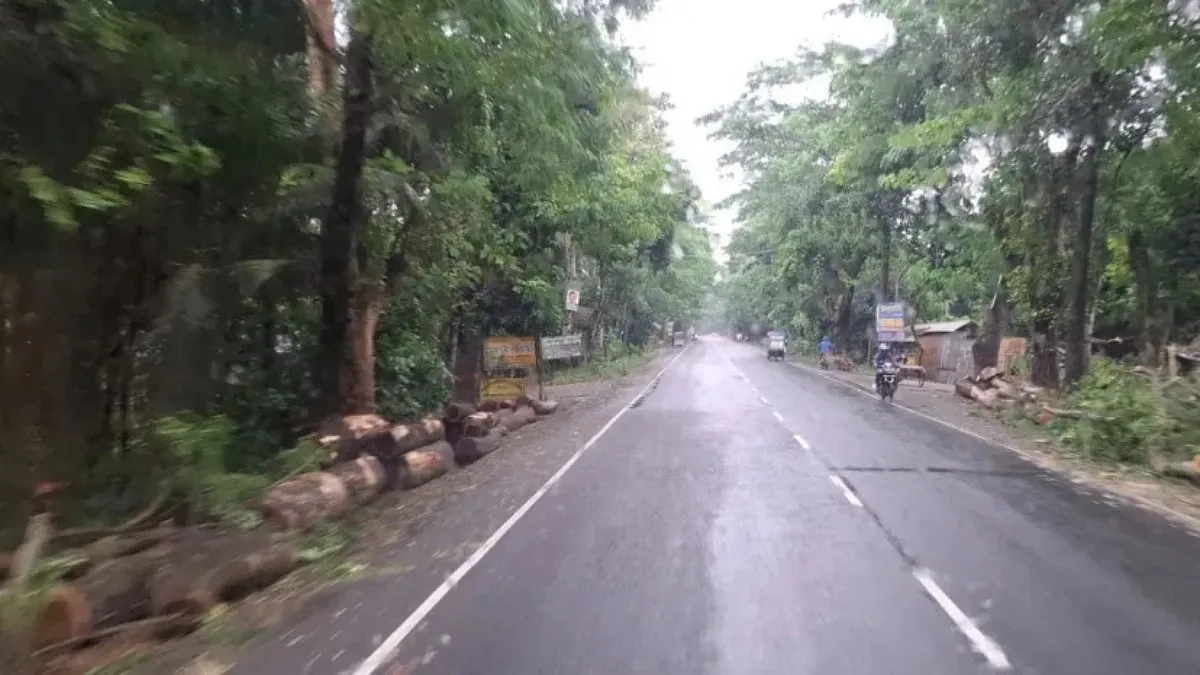
Photo: Agamir Somoy
Vehicles have started moving on roads across Gopalganj since Friday morning following several days of violence and blockades. Public life has begun returning to normal. However, visits to different parts of the district found that despite the calm visible on the surface, a sense of lingering fear remains among ordinary people and transport workers.
Scars of Destruction Along the Roads
During a visit on Friday while traveling from Muksudpur toward Gopalganj Sadar, numerous signs of trees being cut down were seen along both sides of the roads.
On November 18 and 19, leaders and activists of the now-banned Awami League cut down numerous trees of different species, including rain trees (Siris), babla, mahogany and acacia, and dumped them on roads to create obstructions.
Several tin-roofed houses beside the roads were also vandalized and set on fire. The damage was particularly evident at temporary BNP offices. Although rain and cold weather kept the number of people on the roads relatively low, signs of the violence that took place two days earlier were visible everywhere.
Piles of cut trees were also seen on both sides of the highway under Kashiani Police Station’s jurisdiction. The scene of destruction became even more severe after crossing Fukra Bazar. Similar scenes were visible along both sides of the road from Chandradighalia Bazar to Gopalganj Police Lines.
Local residents said leaders and activists of the now-banned Awami League had blocked the roads by dumping these trees in the middle of them over the past two days. During that period, no long-distance buses or private cars were allowed to pass. Only auto-rickshaw vans and a handful of motorcycles could move through the area.
Lingering Anxiety Among Residents
Long-distance bus services resumed on Friday morning after remaining suspended for two days.
Rahat, a supervisor at Dola Paribahan, said, “We were extremely frightened on November 18 and 19. After three to four of our vehicles became stranded, we completely suspended services for the past two days. Vehicle movement resumed on Friday morning. However, as soon as drivers and passengers enter Gopalganj, a sense of fear grips them. Everyone remains on edge, wondering what might happen next.”
Meanwhile, despite the violence on the district’s highways, the situation inside Gopalganj town was different. No incidents of vandalism or arson were reported in the town. Residents were seen going about their daily activities.
Majid, a grocery shop owner in the Launch Ghat area near the Police Lines, said, “I kept my shop closed on Thursday due to the lockdown and security concerns. However, everyone reopened their shops voluntarily on Friday morning. All activities in the town are now normal.”
Arson Attacks on Police Stations, Hospitals and Homes
According to district police, more than 20 establishments and numerous vehicles were set on fire or vandalized in different parts of Gopalganj between November 14 and 19.
Attacks on police stations and law enforcement agencies: On the night of November 17, a police station in Tungipara was attacked and set on fire during a protest and clash. That same night, at least four vehicles, including an armored vehicle and a jeep belonging to the Border Guard Bangladesh (BGB), were set on fire at Nilfa Bazar on the Gopalganj-Tungipara road.
Later, on November 19, Muksudpur Police Station came under attack. Between 10 and 20 vehicles, including police vehicles and seized vehicles kept inside the police station compound, were set on fire.
Attacks on lawmakers’ homes and establishments: At least 15 houses belonging to Gopalganj-3 constituency MP S M Jilani and his relatives were set on fire, including his own residence in the Patgati Bazar area of Tungipara.
In addition, the residence of Gopalganj-2 constituency MP Dr. KM Babor and his privately owned Araf General Hospital and Diagnostic Center were set on fire.
Awami League leaders and activists also set fire to the residence of Gopalganj-1 constituency MP Selimuzzaman Selim and several houses belonging to his associates.
Political offices and other establishments: The house of M H Khan Manju, former president of the district BNP, in the Chowrangi area of Gopalganj town was attacked. Earlier, on November 14, the Kushli Union BNP office and several nearby shops at Nilfa Bazar in Tungipara were set on fire.
In addition, miscreants vandalized and set fire to a branch office of Grameen Bank in Muksudpur on the night of November 19.
Police and the administration have reportedly adopted a cautious approach to bringing the overall law and order situation under control and dispelling public fears.
IGP Visits to Assess Situation
Inspector General of Police (IGP) Ali Hossain Fakir visited Gopalganj on Friday to assess the law-and-order situation. He was accompanied by the heads of the SRB, BGB and Ansar.
After holding a meeting with law enforcement personnel at the district circuit house on Friday afternoon, the IGP briefed journalists.
He called on local residents to cooperate with police and other forces in maintaining normalcy. He said, “Peace-loving people must unite and take a stand against those who create unrest.”
The IGP said, “The situation in Gopalganj is good so far. It will remain normal in the future as well. The number of people creating unrest is very small.”
Responding to journalists’ questions about the burning of police stations, the IGP said, “Police stations are there to serve the public. If people themselves burn down police stations, how will the police provide them with services? Even though an area may have hundreds of thousands of people, only a limited number of police officers are assigned to a police station.”
Giving an example, he said, “Even if an area has 1 million people, perhaps only 20 police officers are assigned to the police station. Without the mental and overall cooperation of the public, it is difficult for such a small number of police officers to maintain law and order.”
The IGP further said, “If people believe there is no need for police in their area, they must take the initiative to maintain law and order themselves. However, public cooperation is extremely important alongside the police to keep the situation normal.”
Regarding the Awami League’s planned programs, the IGP said, “There have been many prolonged programs in the past. Everyone knows what happened as a result of those programs. No situation should be created that forces law enforcement agencies to take a tough stance.”
